Septic Systems 101
What is a Septic System?
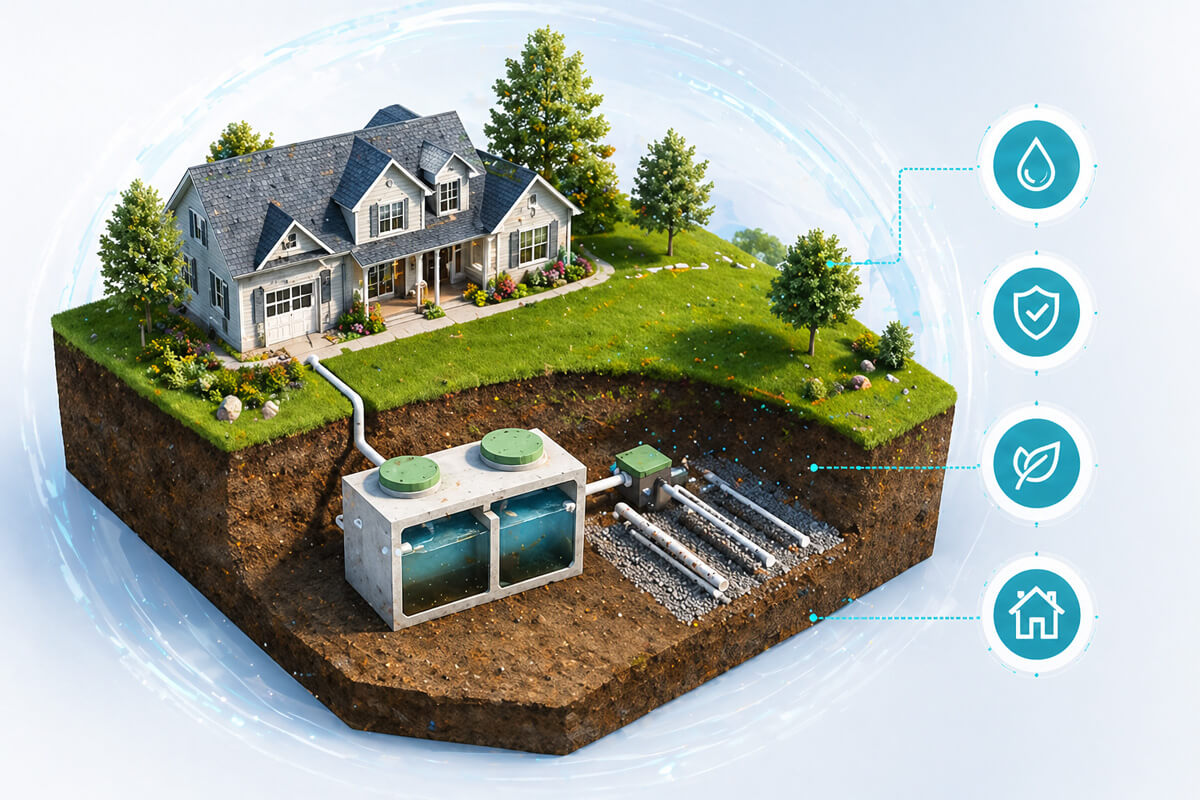
System systems are on-site, underground components that treat wastewater in areas that are not connected to a centralized sewer system. Most systems have two parts, a septic tank and a drainfield. The tank uses bacteria to break down the organic matter inside it. This partially treated sewage then moves into the drainfield where it slowly filters through soil, which removes harmful bacteria, nutrients, and other contaminants.
Alternative systems may use pumps, sand specialized media, or constructed wetlands to further clean the sewage before it reaches soil.
Types of Septic Systems
Understanding the different types of septic systems can help you make informed decisions about your property. Whether you're a homeowner maintaining your current system or a buyer evaluating a new home, knowing how various systems work is essential. Explore the information below to gain valuable insight into septic system types, how they function, and what that means for long-term care and performance.
Conventional Systems
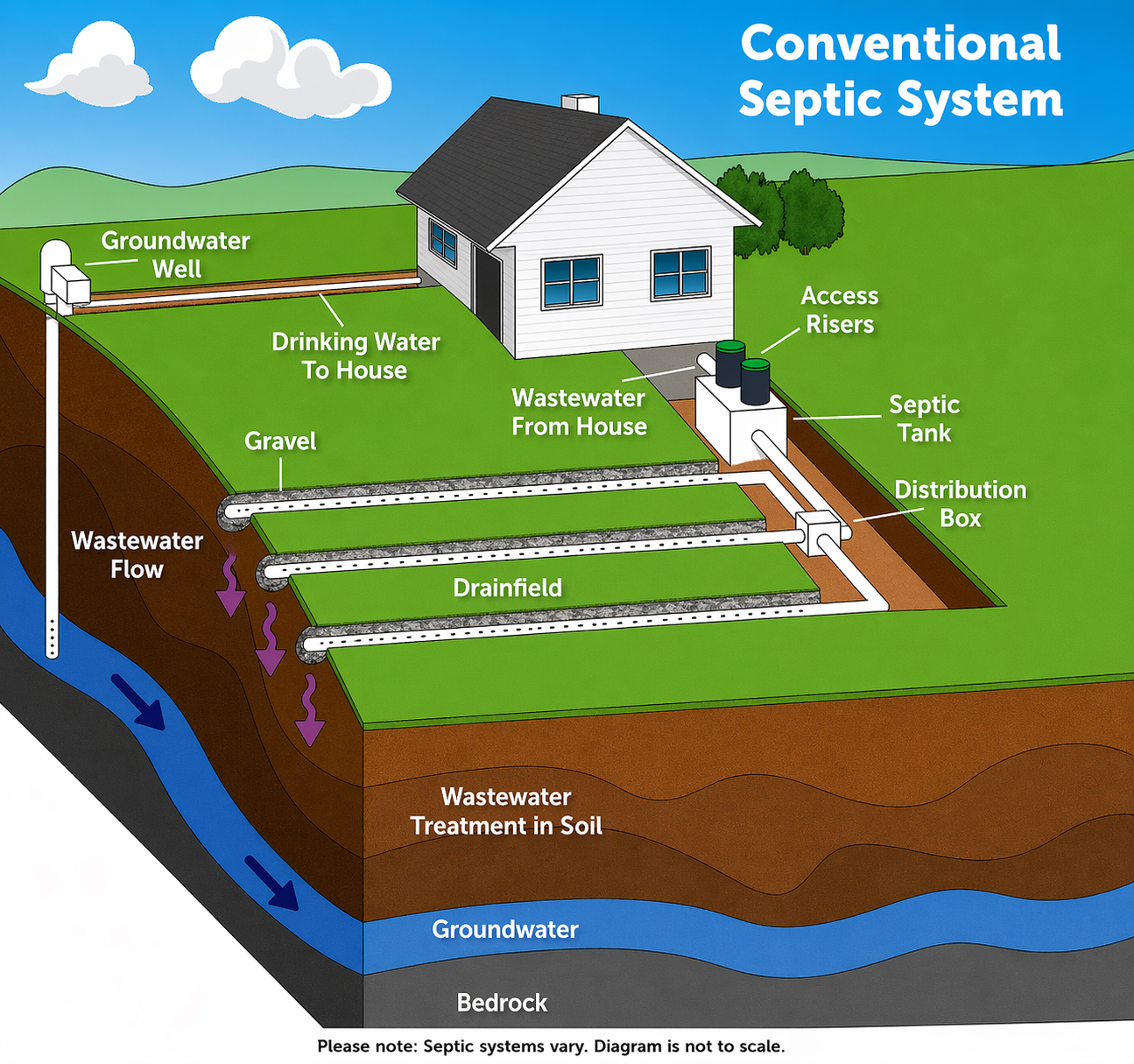
A conventional septic system is the most common type of on-site wastewater treatment system, using a septic tank and a drainfield to treat and disperse wastewater.
These systems are typically installed at single-family homes or small properties. Because they require a larger area for the drainfield, they may not be suitable for all sites—especially where space or soil conditions are limited.
Wastewater first flows into the septic tank, where solids settle and begin to break down. The liquid wastewater then moves into a series of shallow underground trenches filled with gravel or stone.
A protective layer (such as geofabric) helps keep soil from clogging the system, allowing wastewater to flow evenly through the trench. As it filters through the stone and into the surrounding soil, natural microbes further treat the water before it returns to the groundwater.
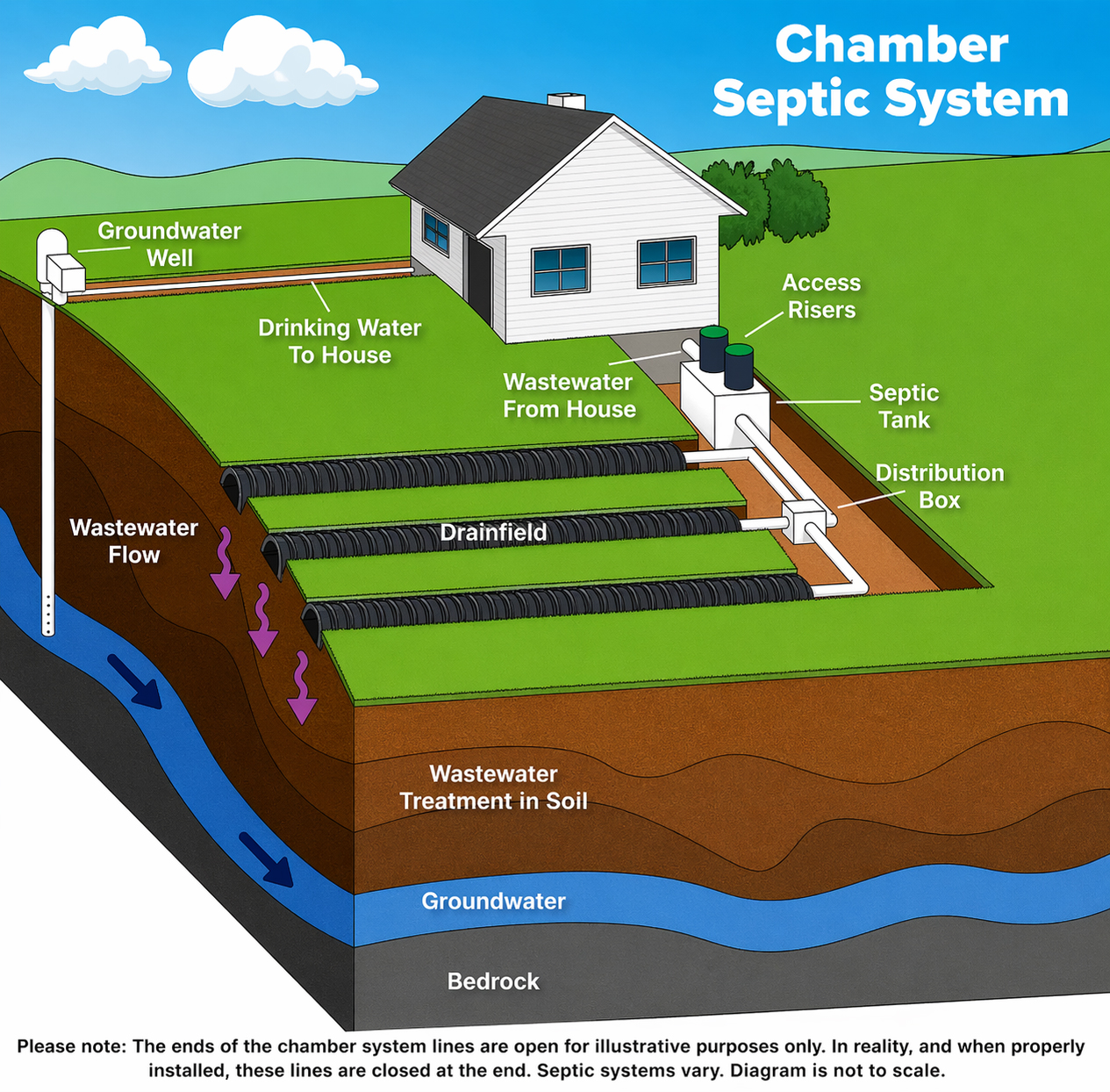
A chamber septic system is a type of conventional system that uses large, open-bottom plastic chambers instead of traditional gravel trenches in the drainfield.
After wastewater leaves the septic tank, it flows into these buried chambers. The chambers create open space that allows wastewater to disperse evenly and slowly seep into the surrounding soil, where natural processes remove bacteria, nutrients, and other contaminants.
Because they use less gravel and heavy material, chamber systems are often faster and easier to install than traditional systems. They are commonly used in residential properties and can be especially effective in areas with high groundwater levels, limited gravel availability, or varying wastewater usage, such as vacation or seasonal homes.
Alternative Systems
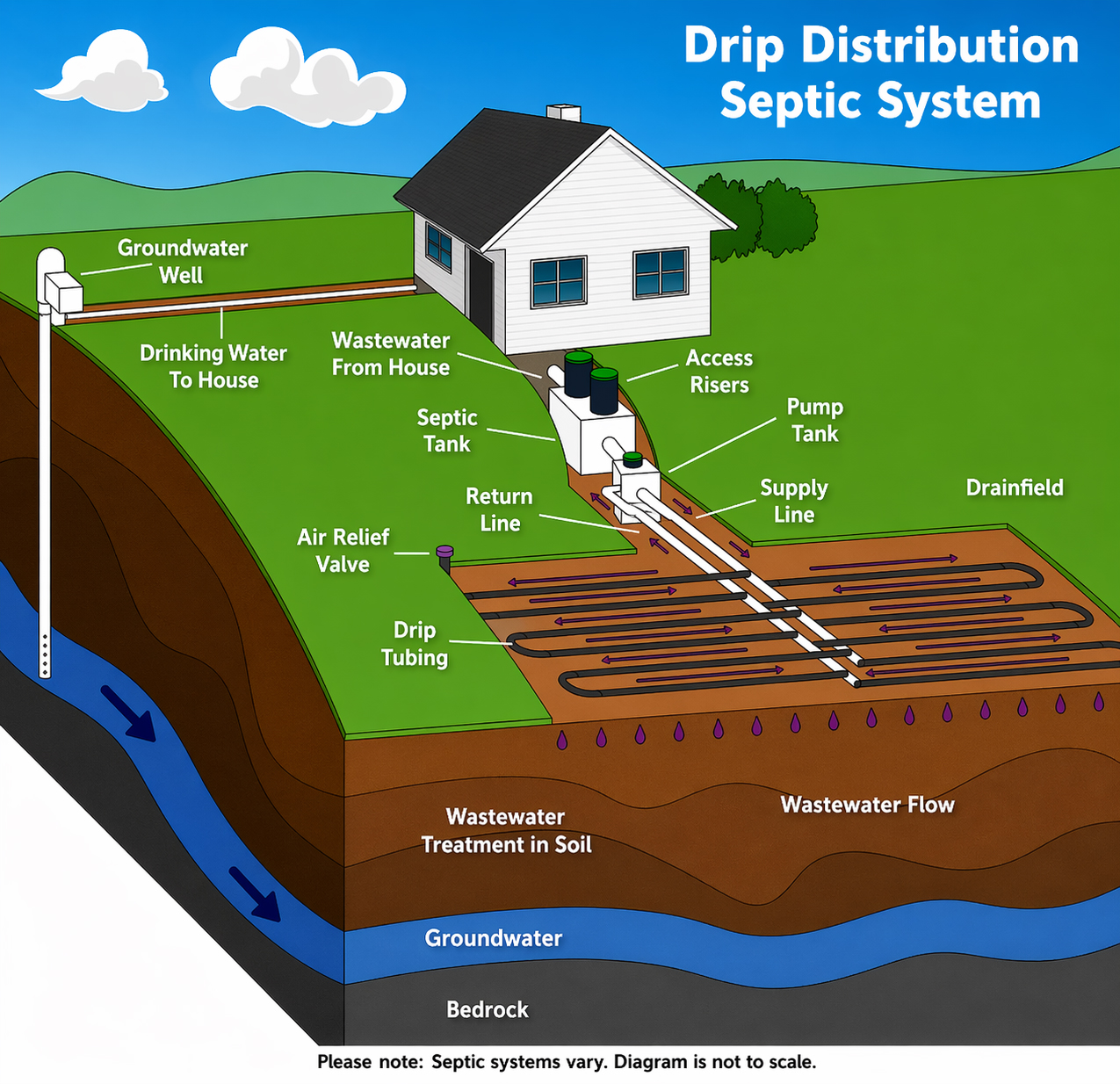
A drip distribution septic system is an advanced system that delivers treated wastewater slowly and evenly into the soil through a network of small, flexible tubes.
After wastewater is treated and sent to a pump tank, it is distributed through drip lines installed just below the surface. The system releases water in controlled doses, allowing the soil to absorb and naturally filter it more efficiently.
Because of this controlled distribution, drip systems are ideal for challenging sites, including areas with shallow soils, slopes, or limited space where traditional drainfields may not work well.
They provide effective treatment while minimizing impact on the landscape and reducing the risk of overloading the soil.
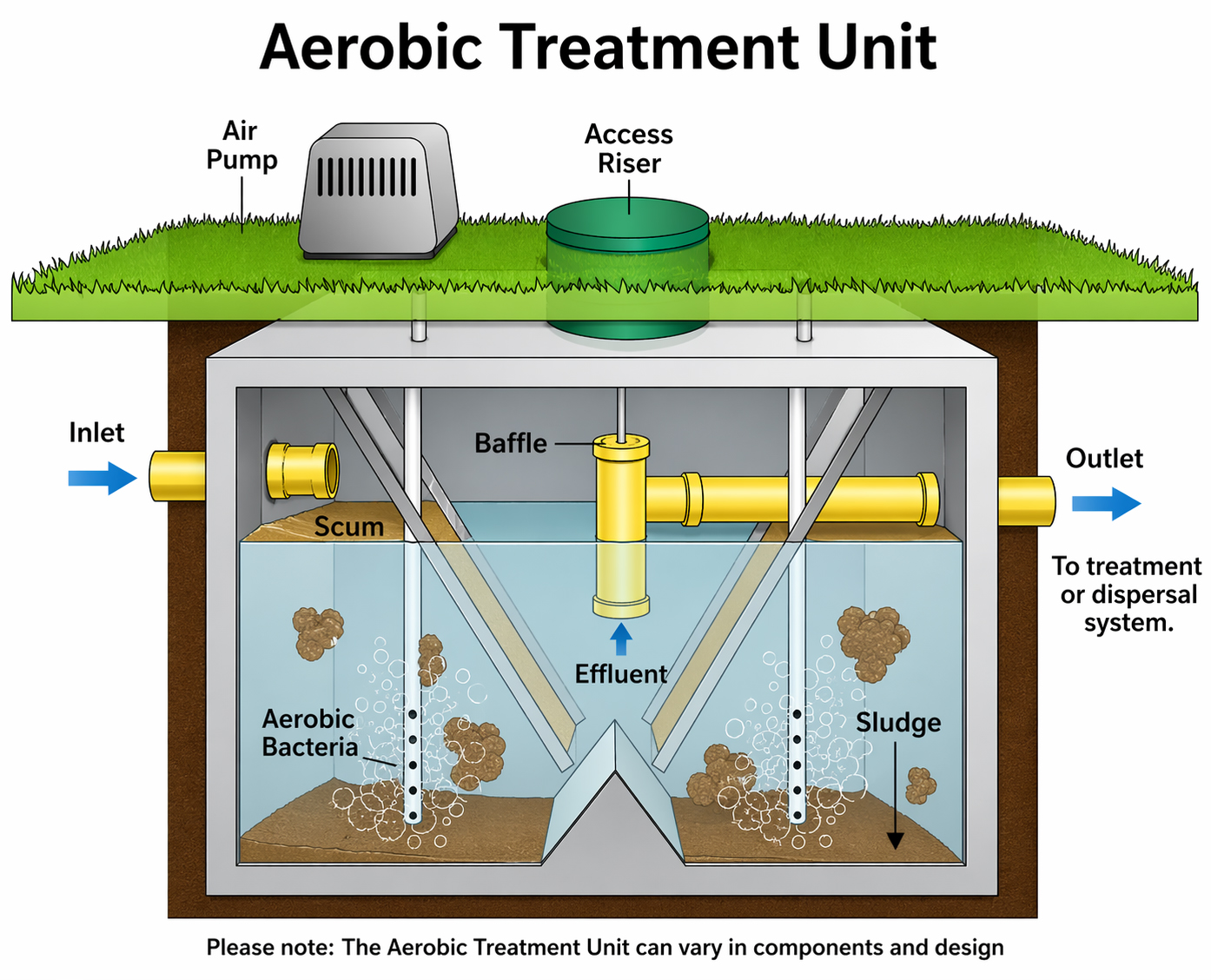
An Aerobic Treatment Unit (ATU) is an advanced septic system that uses oxygen to treat wastewater more efficiently than a conventional system.
Inside the unit, air is pumped into the tank to support oxygen-loving bacteria that break down waste more thoroughly before the water moves to the drainfield or another dispersal system.
Some ATUs include multiple treatment stages, such as pretreatment and final disinfection, to further reduce contaminants and improve water quality.
These systems are often used on smaller lots, near sensitive water areas, or where soil conditions are not suitable for traditional systems.
Because ATUs rely on mechanical components, they require electricity and regular maintenance to keep the system operating properly.
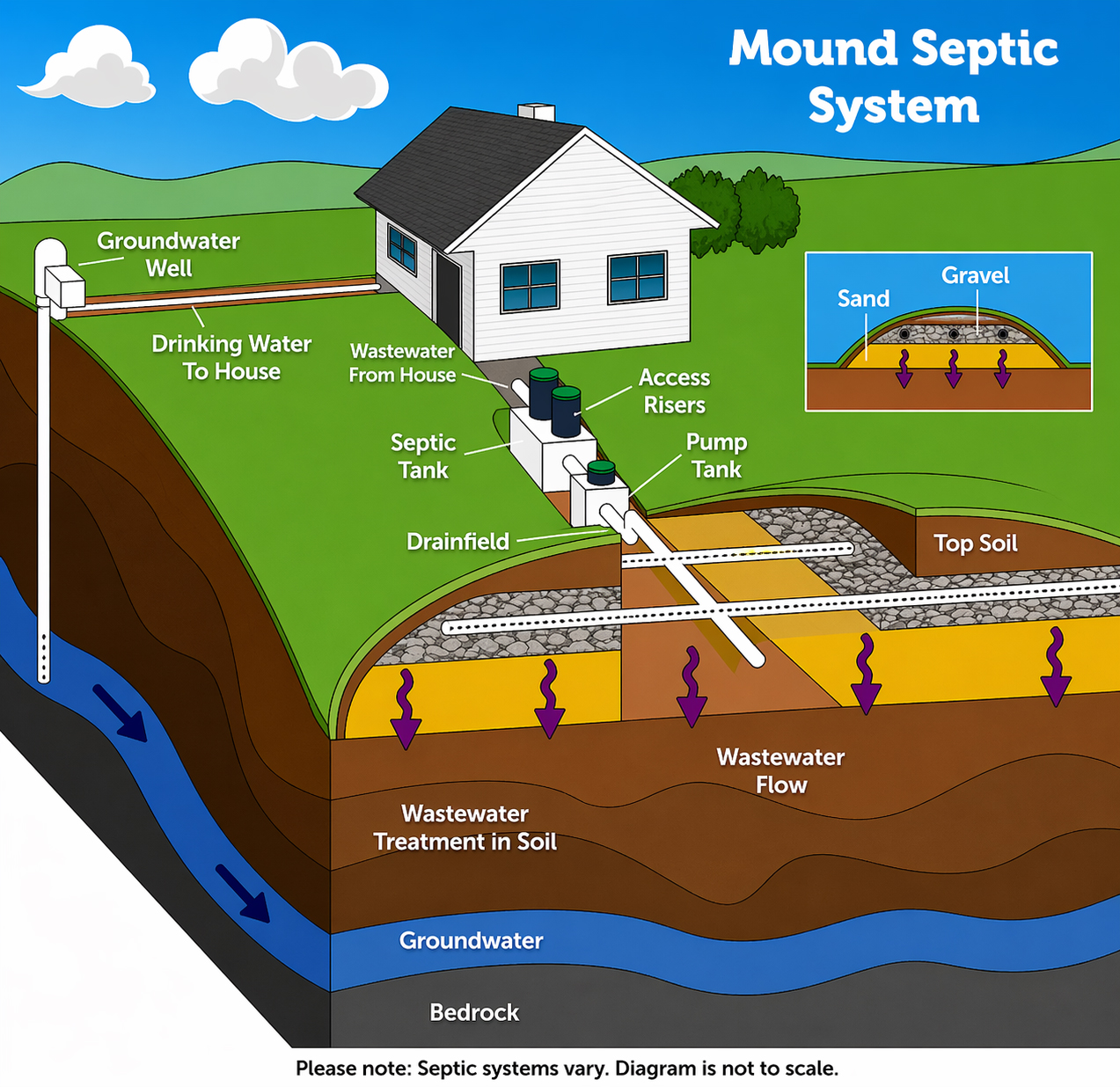
A mound septic system is an above-ground system designed for areas where natural soil conditions are not suitable for a traditional drainfield.
Instead of being installed underground, the drainfield is built in a raised mound of sand and gravel. After wastewater leaves the septic tank, it is pumped into the mound in controlled doses, where it flows through the engineered layers before reaching the natural soil below.
The sand and gravel inside the mound act as a filtration system, helping treat the wastewater before it enters the ground.
Mound systems are commonly used on properties with shallow soil, high groundwater levels, or poor drainage conditions.
Although they require more space and are visible in the yard, they provide reliable treatment when properly installed and maintained.
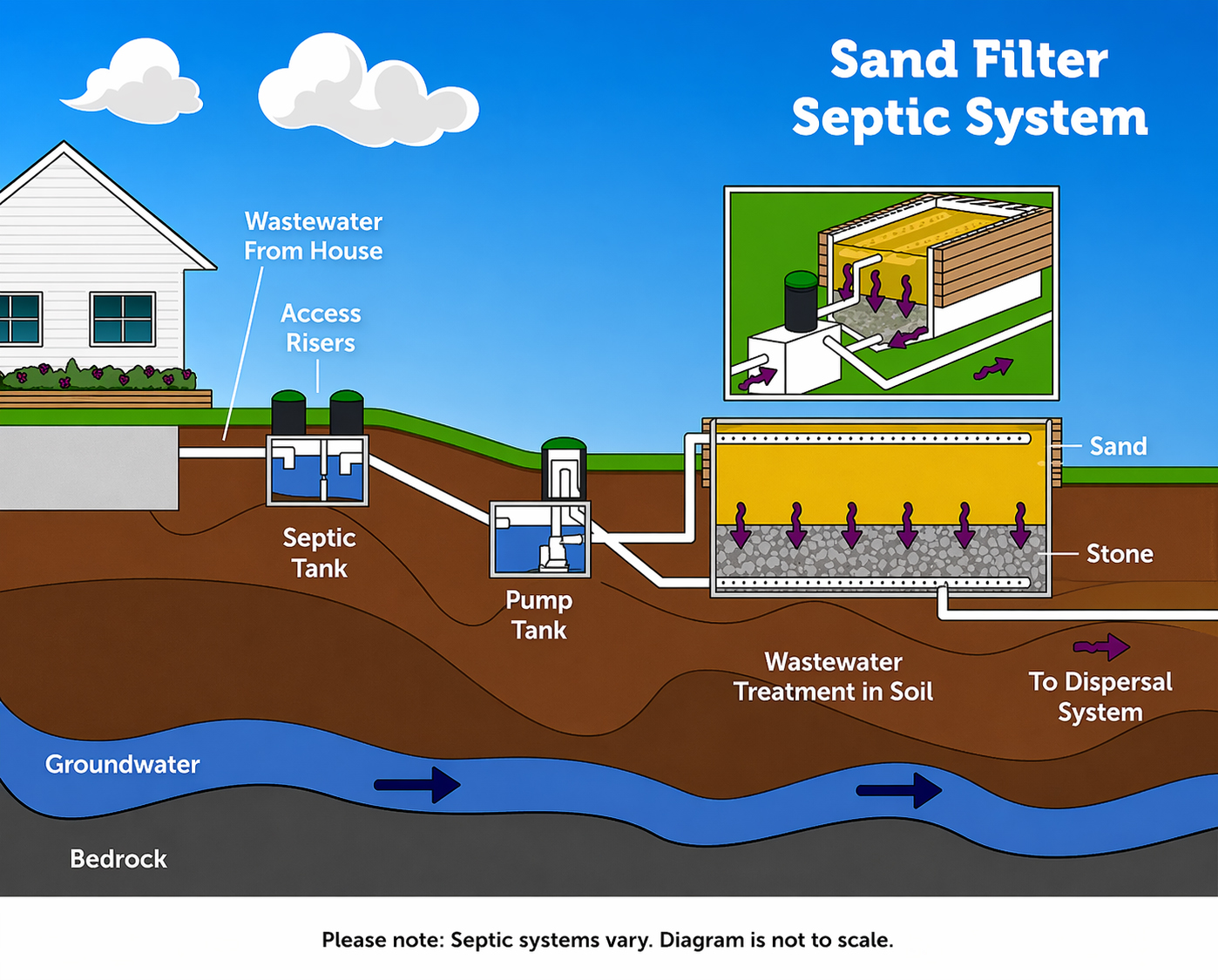
A recirculating sand filter system is an advanced septic system that provides a higher level of wastewater treatment using sand filtration.
After wastewater leaves the septic tank, it flows into a pump tank and is distributed into a sand filter, typically housed in a lined container. As the water passes through the sand, natural filtration and beneficial bacteria remove contaminants.
A portion of the treated water is then recirculated back through the filter, allowing for additional cleaning before final discharge.
These systems are often used on properties with poor soil conditions or where extra protection of groundwater and nearby waterways is required.
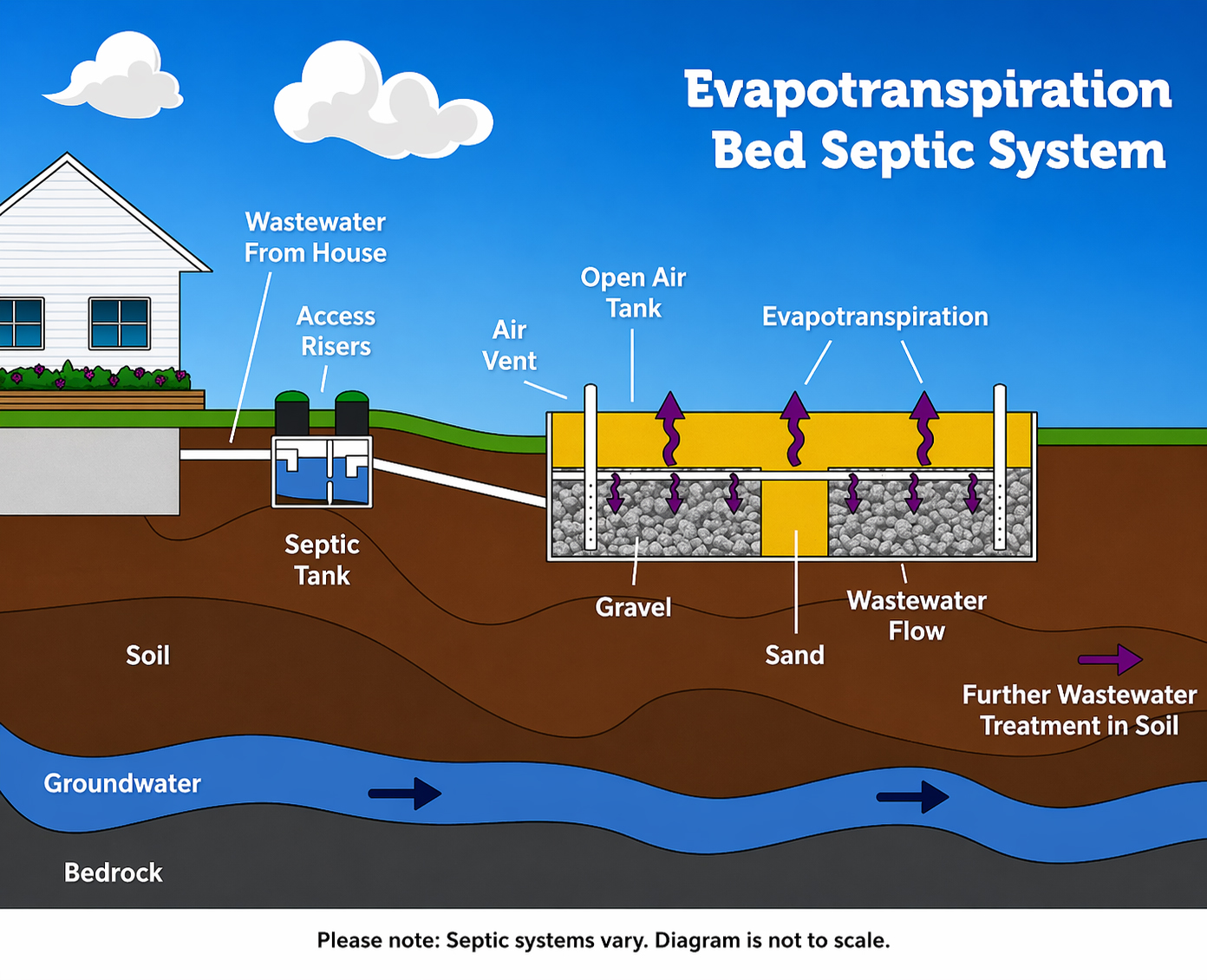
An evapotranspiration system is a type of septic system that disposes of wastewater by releasing it into the air rather than allowing it to soak into the ground.
After wastewater leaves the septic tank, it flows into a specially designed drainfield lined with a watertight material. Instead of filtering into the soil, the water evaporates from the surface or is absorbed by plants and released into the air through a natural process called transpiration.
These systems are most effective in dry climates with low rainfall, where evaporation can keep up with wastewater flow.
They are often used in areas with shallow soil, but performance can be affected by heavy rain or snow, which may limit their effectiveness.
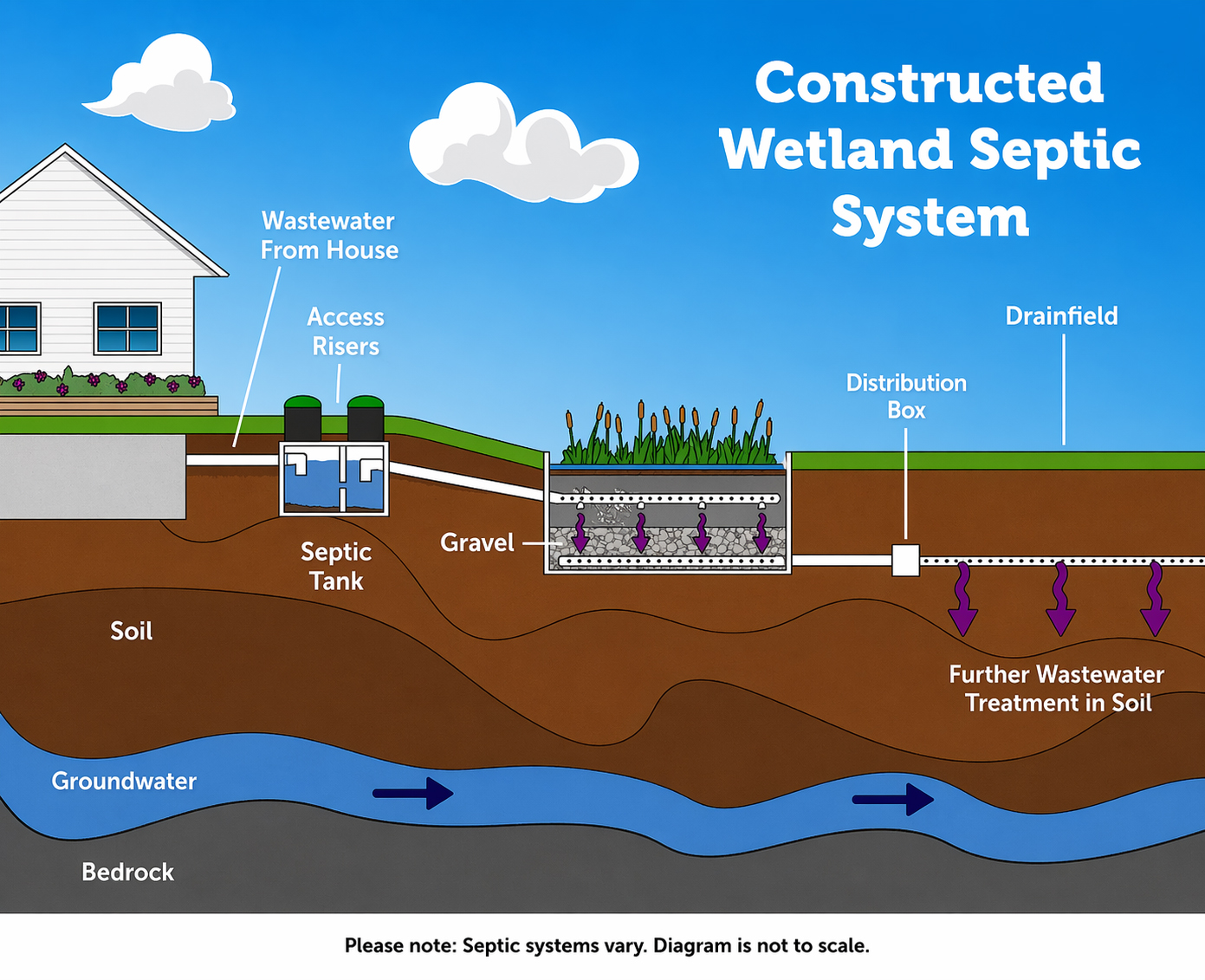
A constructed wetland septic system is an advanced system that uses plants, soil, and natural biological processes to treat wastewater.
It is designed to mimic the way natural wetlands clean water. After wastewater leaves the septic tank, it flows into a lined basin filled with gravel and wetland plants.
Within this basin, beneficial bacteria and plant roots work together to break down organic matter, remove nutrients, and filter out contaminants. The treated water then typically moves to a drainfield for final soil treatment.
Constructed wetland systems provide a high level of treatment and are often used in environmentally sensitive areas.
In addition to their function, they can serve as a natural landscape feature, but they require proper design and regular maintenance to operate effectively.
A cluster community septic system is a shared wastewater treatment system that serves multiple homes or buildings instead of a single property.
Wastewater from each home flows through a collection system to a central treatment unit. From there, the treated water is discharged to a shared drainfield or other approved dispersal area.
By combining multiple systems into one, cluster systems can reduce the number of individual drainfields and improve efficiency, making them a practical option for developments such as rural subdivisions.
These systems can range from simple shared tanks to more advanced treatment setups.
Because they serve multiple properties, cluster systems typically require professional management and ongoing oversight to ensure proper operation and maintenance.
.jpg)
Additional Resources
For more information on septic systems, visit the U.S. Environmental Protection Agency's website. The EPA provides trusted, nationwide guidance on septic system case, water quality, and homeowner responsibilities. Exploring their resources can help you better understand how to protect your property, your investment, and your local waterways.
Visit EPA Website