Frequent Questions
Septic Systems Made Simple
Septic systems can feel confusing and even overwhelming—especially if you're dealing with an inspection, repair, or buying a property for the first time. You're not alone in having questions.
Take a look at some of the common things people ask about and learn more about septic systems overall. We give you clear, easy-to-understand answers so you can feel more confident and informed when it comes to having and maintaining a septic system.
Find the Answers You Need
Use the dropdown sections below to gain a better understanding of how septic systems work and what that means for your property.
Septic System Basics
A septic system is an underground wastewater treatment system used by homes that are not connected to a municipal sewer line.
It collects wastewater from your home and treats it on-site, separating solids in a tank and dispersing liquid through a drainfield.
This natural process allows wastewater to be filtered and safely returned to the environment, helping protect your property and local water sources.
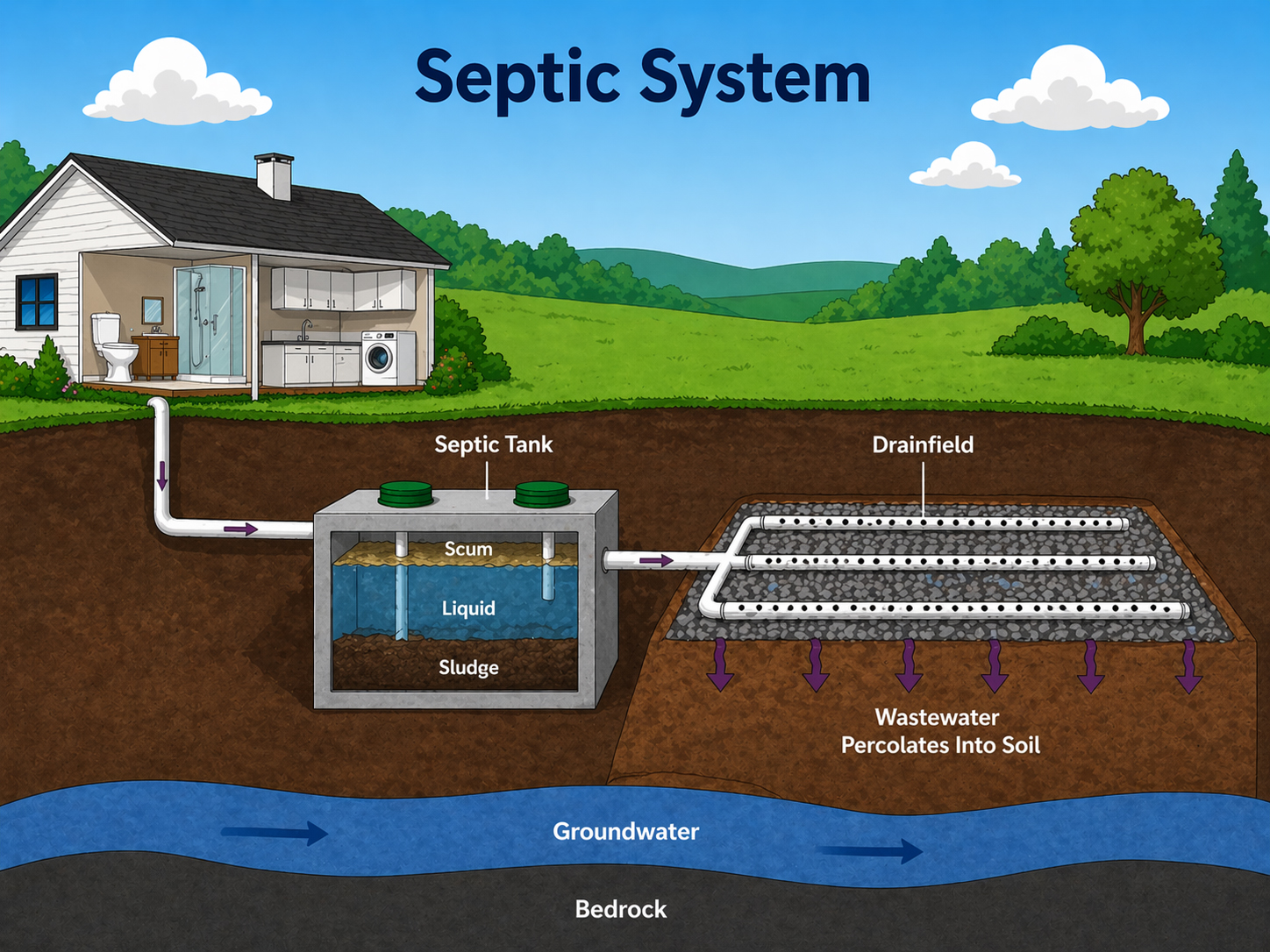
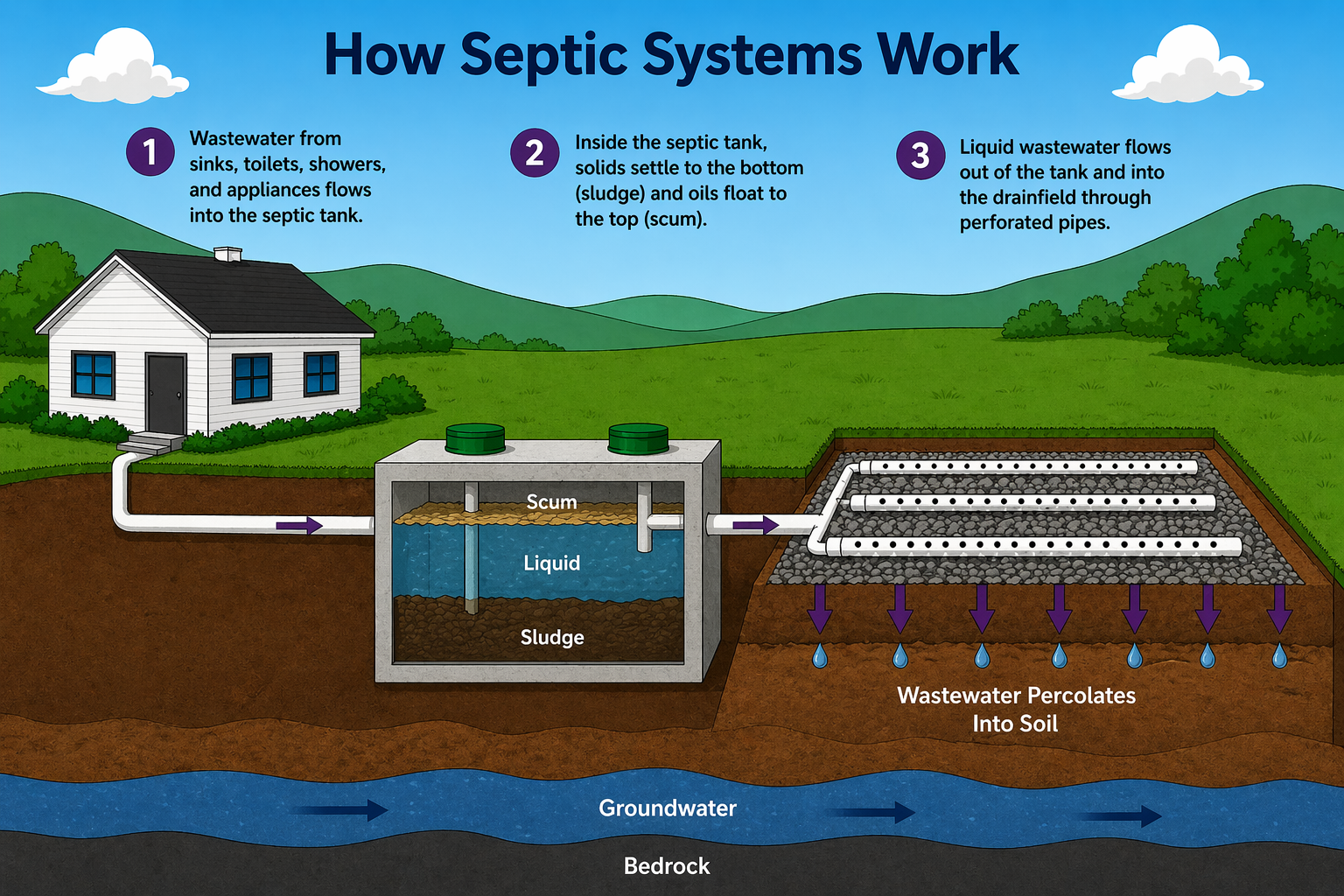
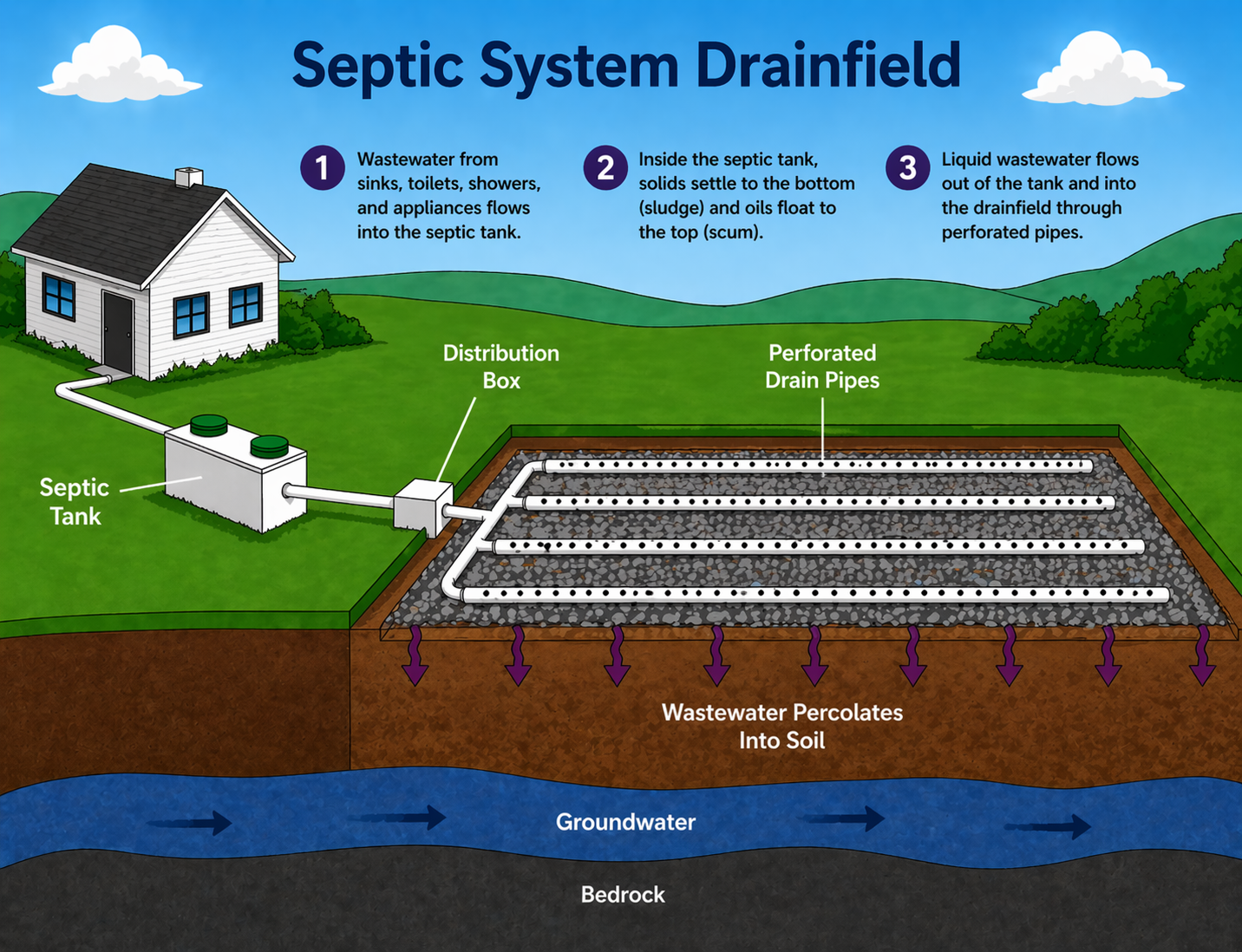
Wastewater from your home flows into a septic tank, where it is separated and treated.
Inside the tank, solids settle to the bottom (sludge), oils and grease float to the top (scum), and the remaining liquid moves out toward the drainfield.
In the drainfield, the soil naturally filters and treats the wastewater, removing contaminants before the water safely returns to the groundwater.
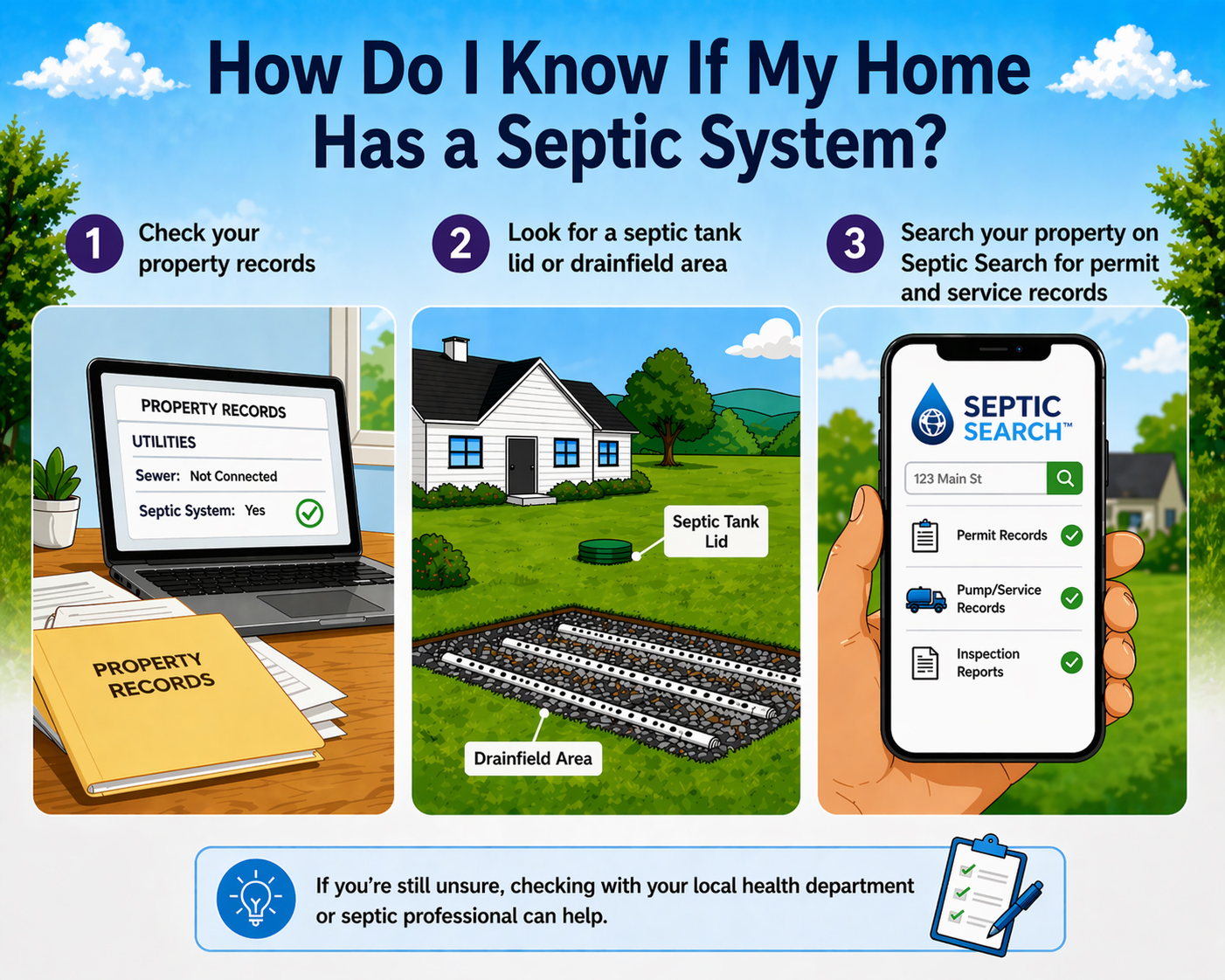
If your home is not connected to a municipal sewer system, it likely uses a septic system.
To confirm, you can:
- Review your property records
- Look for a septic tank lid or drainfield area on the property
- Search your address on Septic Search to find permits and service records
Taking these steps can help you quickly verify the system and better understand how it is set up and maintained.
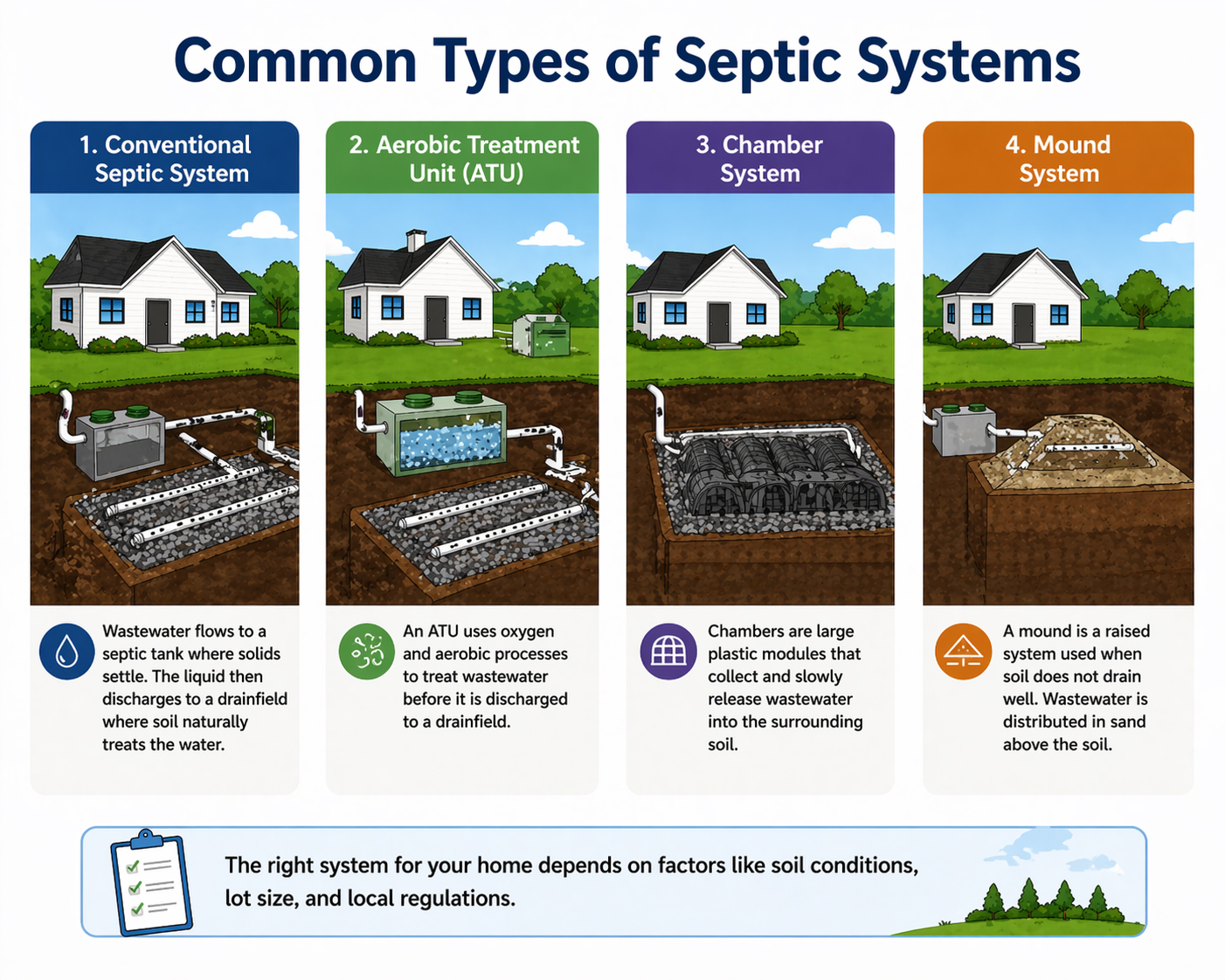
The most common septic system types include:
- Conventional septic systems – The most common type, using a tank and drainfield to naturally treat wastewater in the soil
- Aerobic treatment units (ATUs) – Use oxygen to break down waste more efficiently and are often used in areas with challenging soil conditions
- Chamber systems – Utilize a series of chambers instead of gravel trenches to distribute wastewater into the soil
- Mound systems – Installed above ground when soil conditions are not suitable for a traditional drainfield
The type of system used depends on several key factors, including soil conditions, lot size, environmental requirements, and local regulations.
Choosing the right system ensures proper wastewater treatment, protects your property, and helps you stay compliant with local health standards.
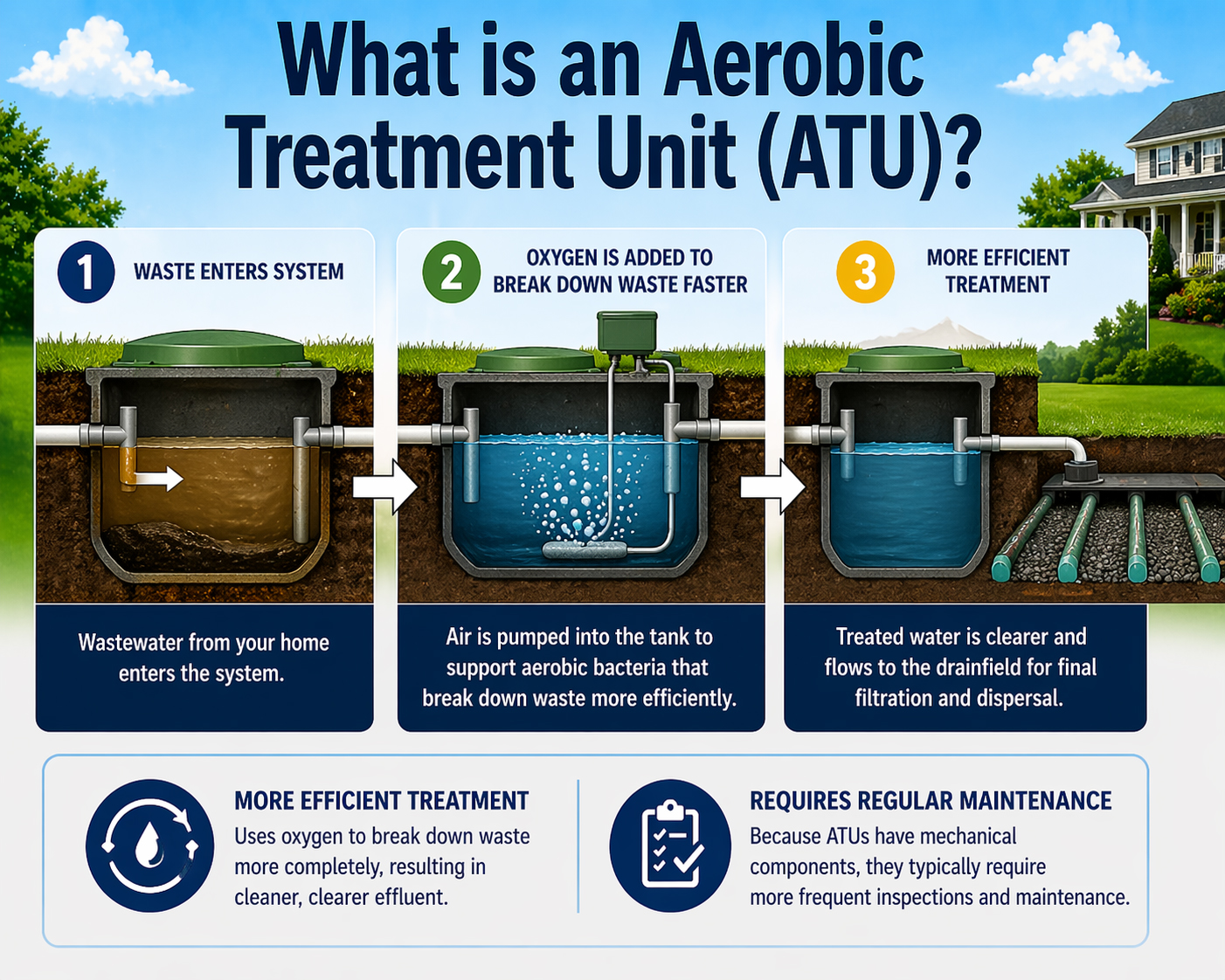
An Aerobic Treatment Unit (ATU) is a type of septic system that uses oxygen to break down waste more efficiently than a conventional system.
By introducing air into the treatment process, ATUs promote the growth of aerobic bacteria, which help treat wastewater more thoroughly. Because of this added complexity, ATUs typically require more frequent inspections and maintenance to ensure proper operation.
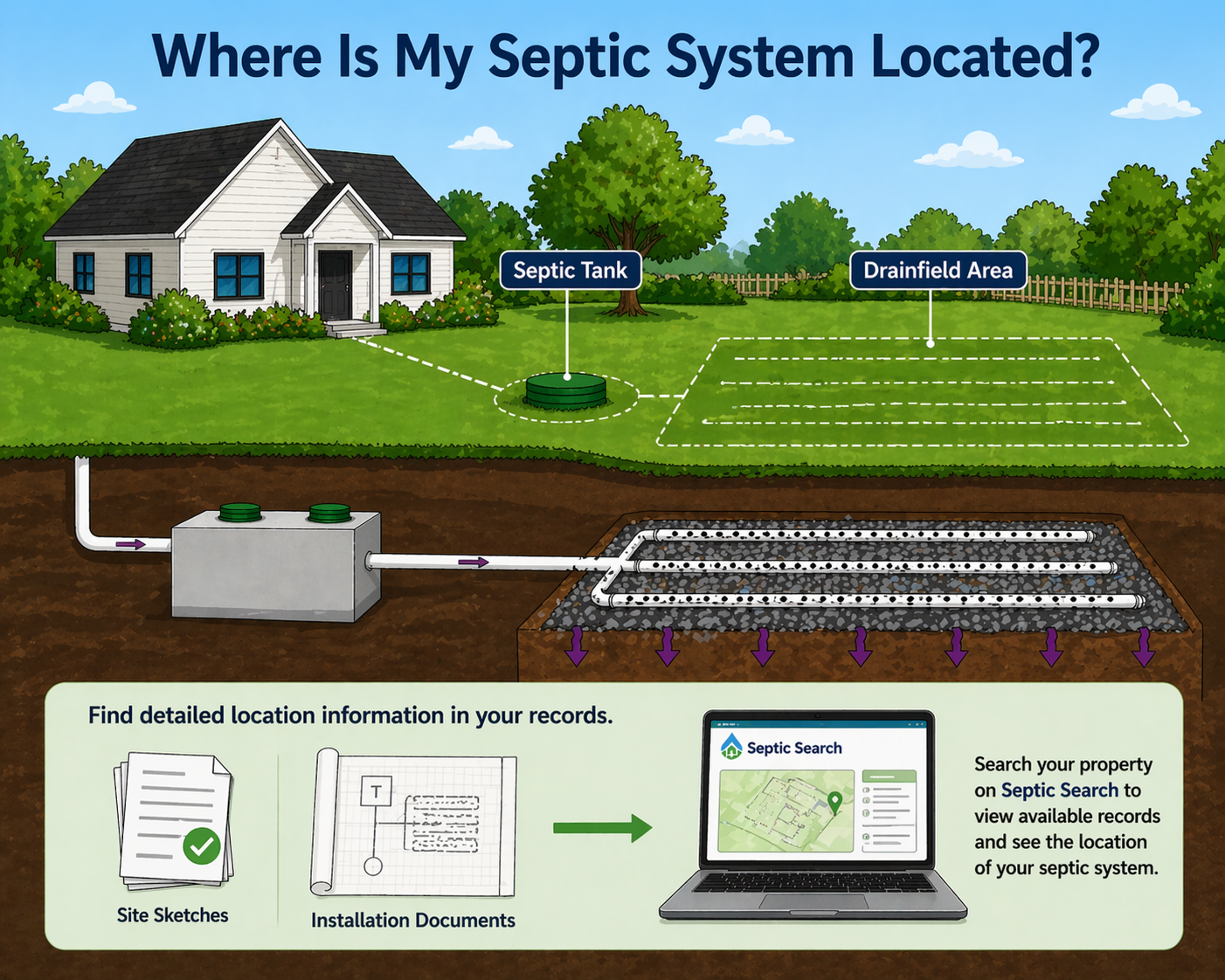
Septic systems are typically buried underground in your yard, making them easy to overlook if you don’t know what to look for.
In most cases, the system includes a septic tank and a drainfield, both located below the surface and often marked only by subtle features like lids or slightly raised areas.
Records available through Septic Search can help you pinpoint the exact location, including site sketches and installation documents that show where key components are placed on the property.
Knowing where your septic system is located is important for avoiding damage, planning landscaping, and ensuring proper maintenance over time.
The drainfield (also called a leach field) is the area where treated wastewater leaves the septic tank and is filtered naturally by the soil.
After solids settle in the tank, liquid wastewater flows through perforated pipes in the drainfield, where it slowly disperses into the ground. As it moves through the soil, natural processes remove harmful bacteria, nutrients, and contaminants before the water returns to the groundwater.
A properly functioning drainfield is essential for safely treating wastewater and protecting your property and the surrounding environment.
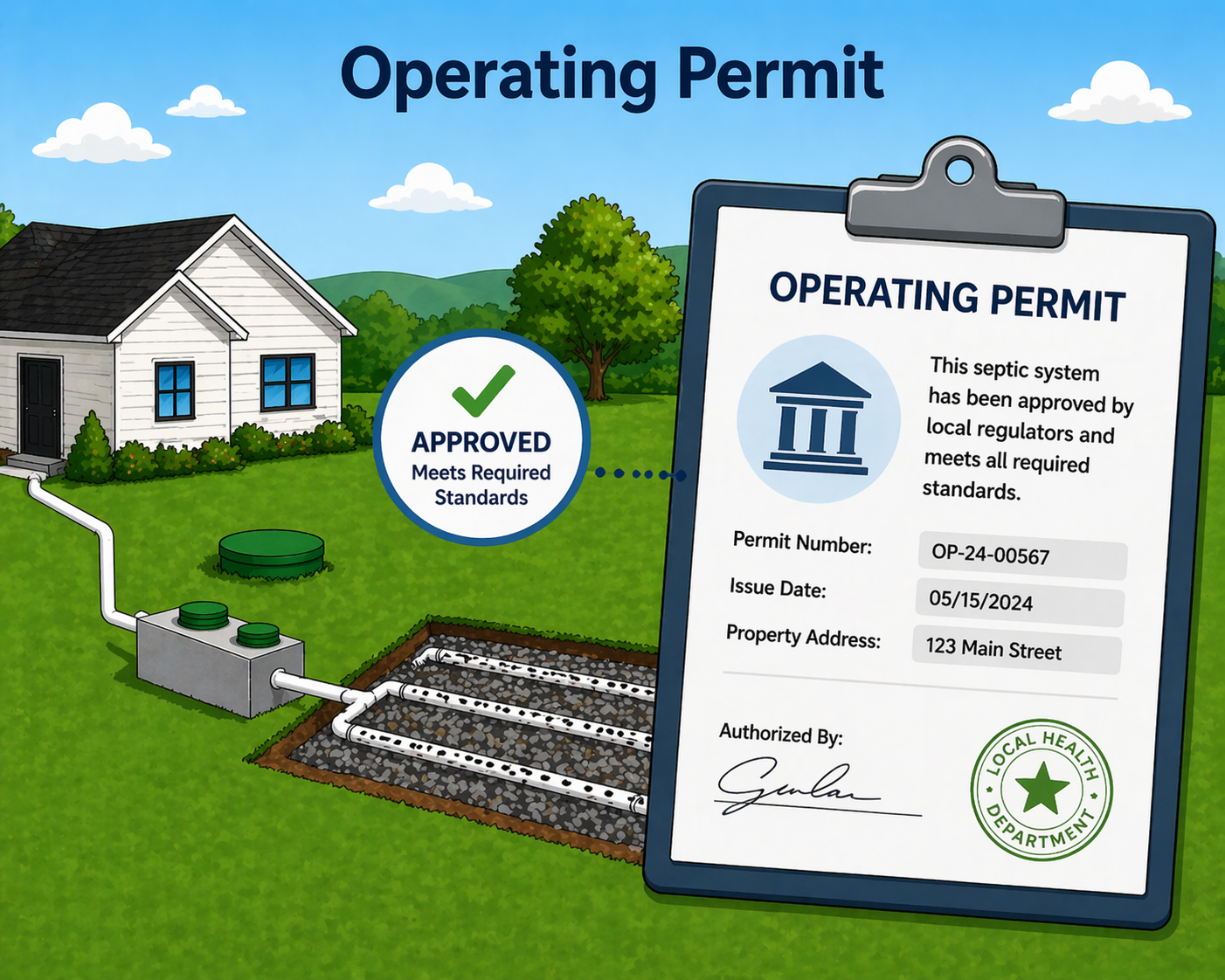
An Operating Permit confirms that a septic system was approved by local regulators and met required standards at the time of inspection.
This means the system was properly designed, installed, and inspected according to local health and environmental regulations.
An Operating Permit provides an important record of compliance, showing that the system met all necessary requirements when it was placed into service. It can also be a valuable reference for homeowners, buyers, and inspectors when evaluating the condition and history of the system.
Buying or Selling a Home with Septic
Yes—A septic inspection is strongly recommended before buying a home.
It provides critical insight into the condition of the system, helping identify maintenance needs, estimate system age, and uncover potential issues before closing.
Because septic systems are underground, problems are not always visible. An inspection can reveal costly risks early, giving you the opportunity to negotiate repairs, request credits, or make a more informed purchase decision.
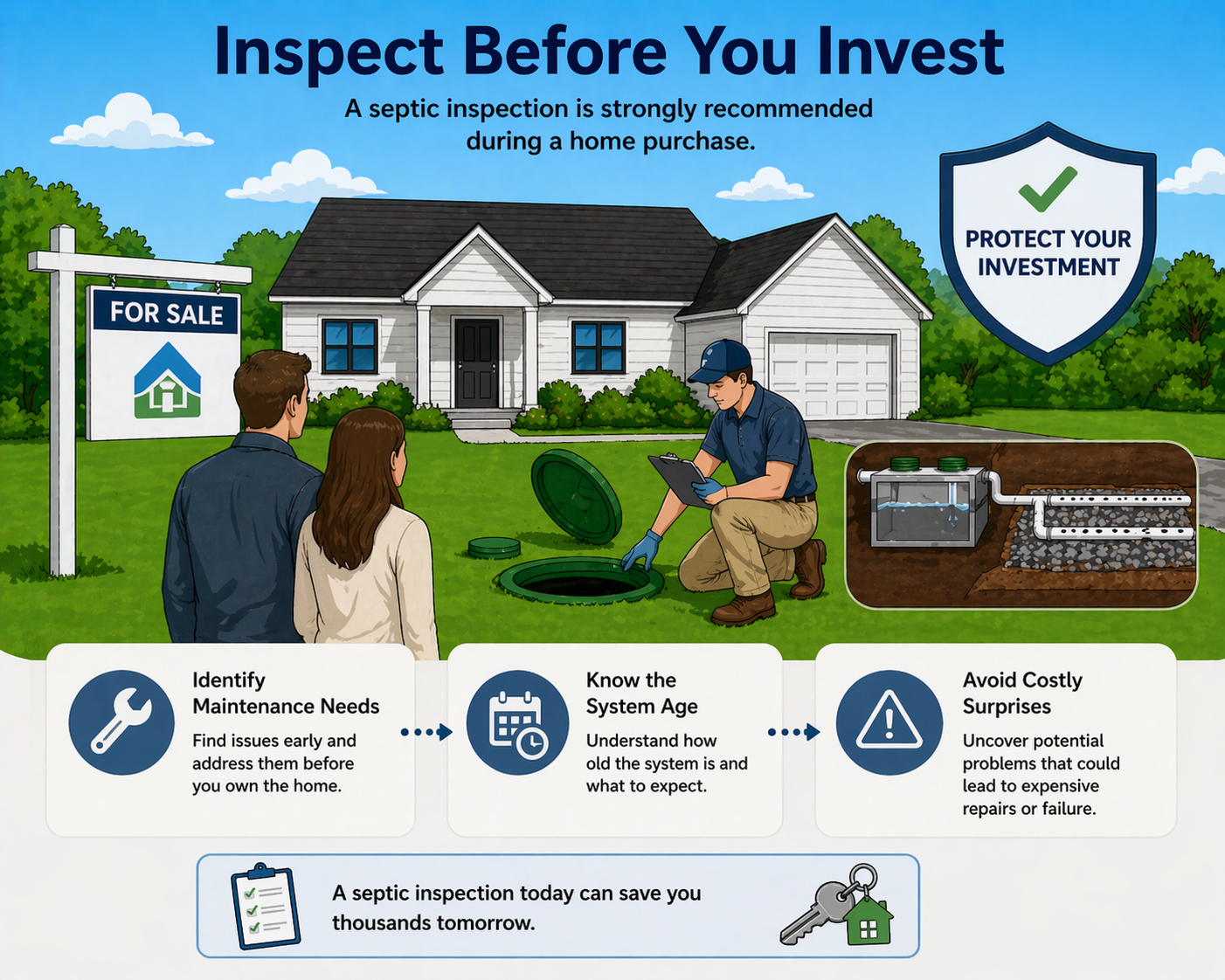
Septic records help buyers understand the true condition of the system and avoid unexpected repair costs before purchasing a home.
Because septic systems are underground, their condition isn’t always visible during a standard showing. Access to records provides important insight into how the system has been installed, maintained, and inspected over time.
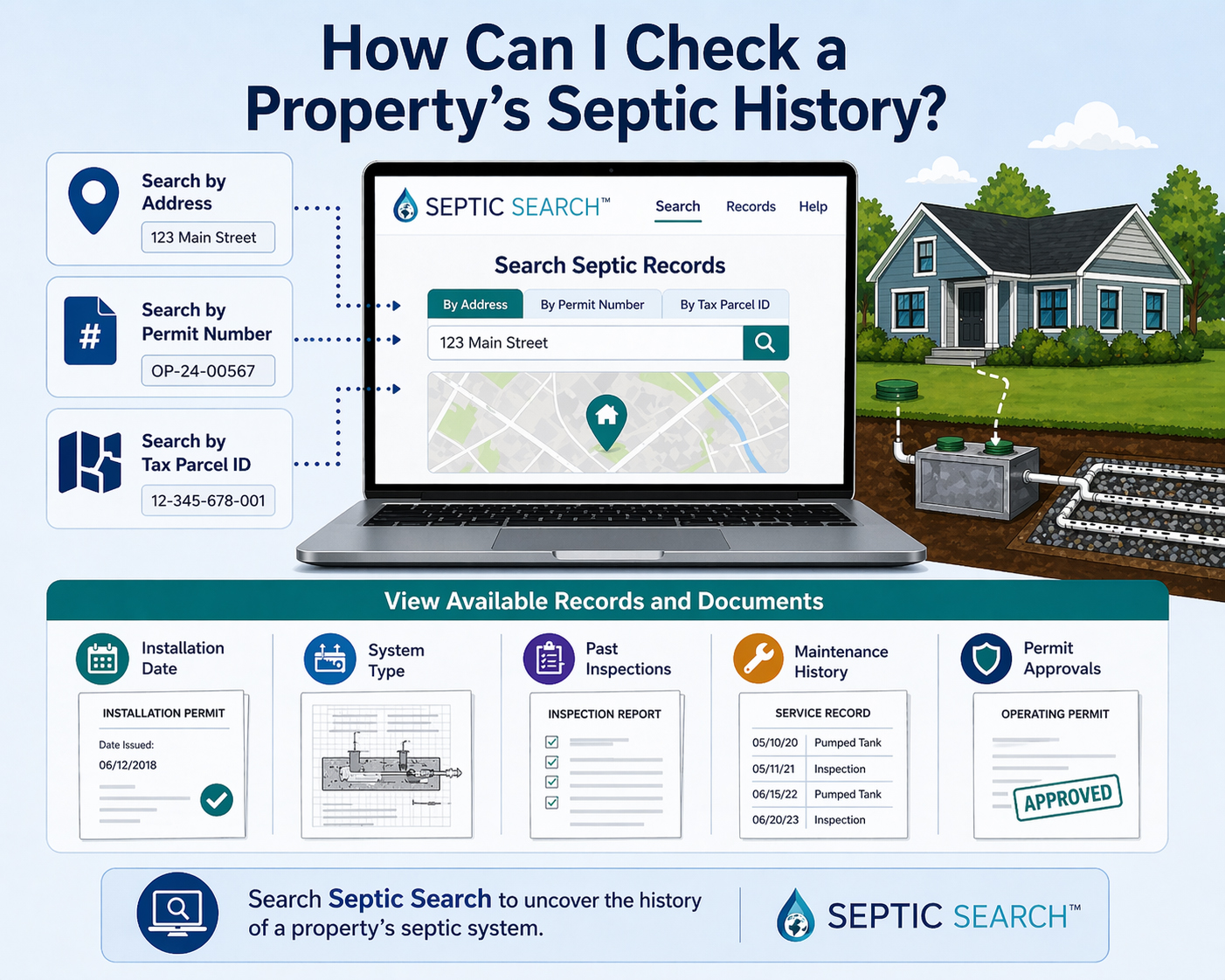
Septic records may include:
- Installation date
- System type
- Past inspections
- Maintenance history
- Permit approvals
Having this information allows buyers to make informed decisions, identify potential risks early, and move forward with greater confidence during the purchase process.

You can quickly search for a property’s septic history using Septic Search.
Simply search by address, permit number, or tax parcel ID to view available service records, inspection history, and scanned documents.
This information provides valuable insight into the system’s condition, past maintenance, and compliance history—helping you make more informed decisions and avoid unexpected issues.
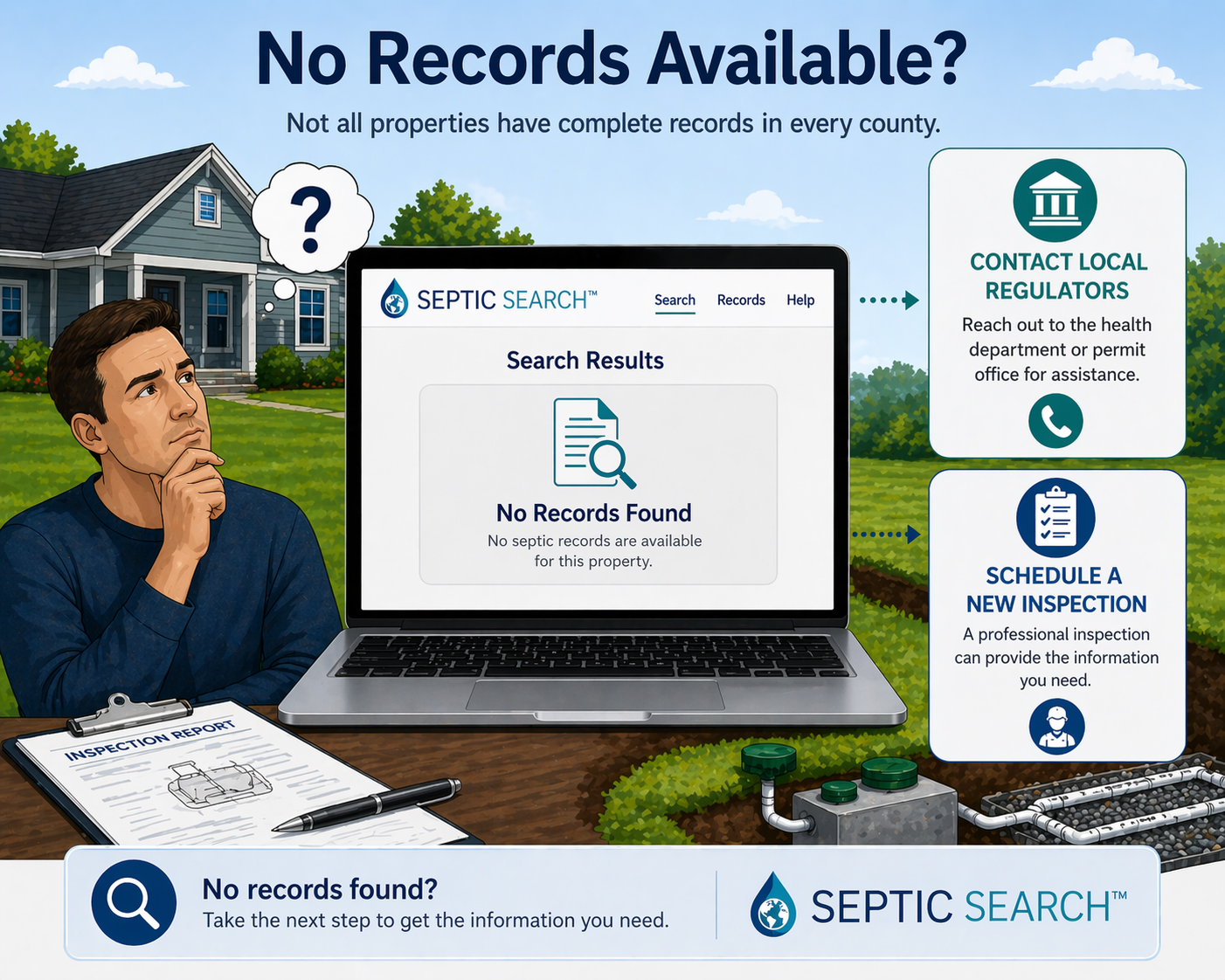
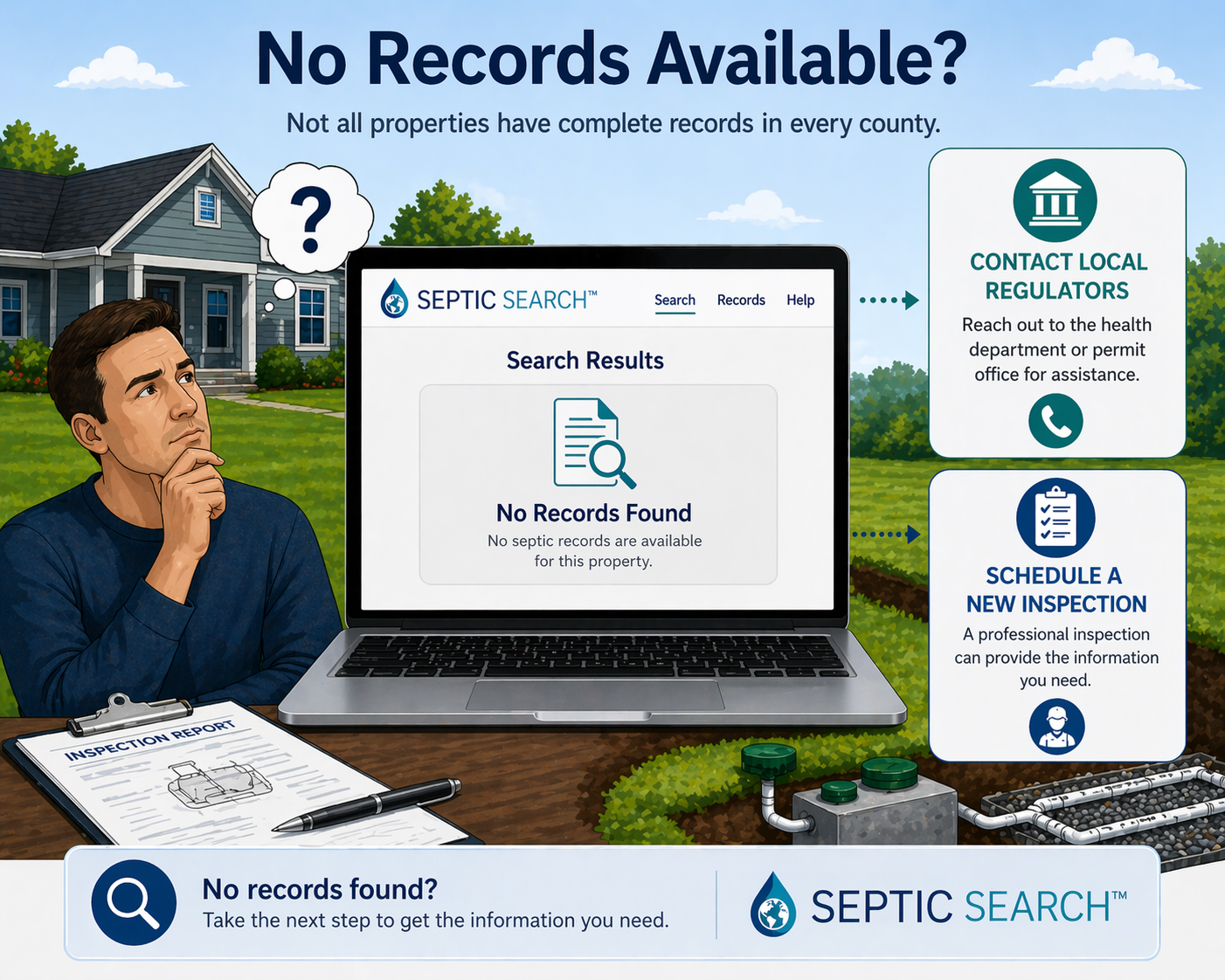
Not all properties have complete septic records available in every county.
In some cases, records may be missing, incomplete, or not yet digitized—especially for older systems or areas that have not fully transitioned to digital recordkeeping.
If no records are found, the system may still exist, but additional steps may be needed to gather information. This can include contacting your local health department or scheduling a new inspection to determine the system’s condition and location.
Responsibility depends on the purchase agreement and is typically negotiated between the buyer and seller after inspection results are reviewed.
Common outcomes may include:
- The seller completes repairs before closing
- The buyer receives a credit to cover repairs
- The buyer accepts the system as-is
The final decision is based on factors such as inspection findings, repair costs, and the terms agreed upon during negotiations.

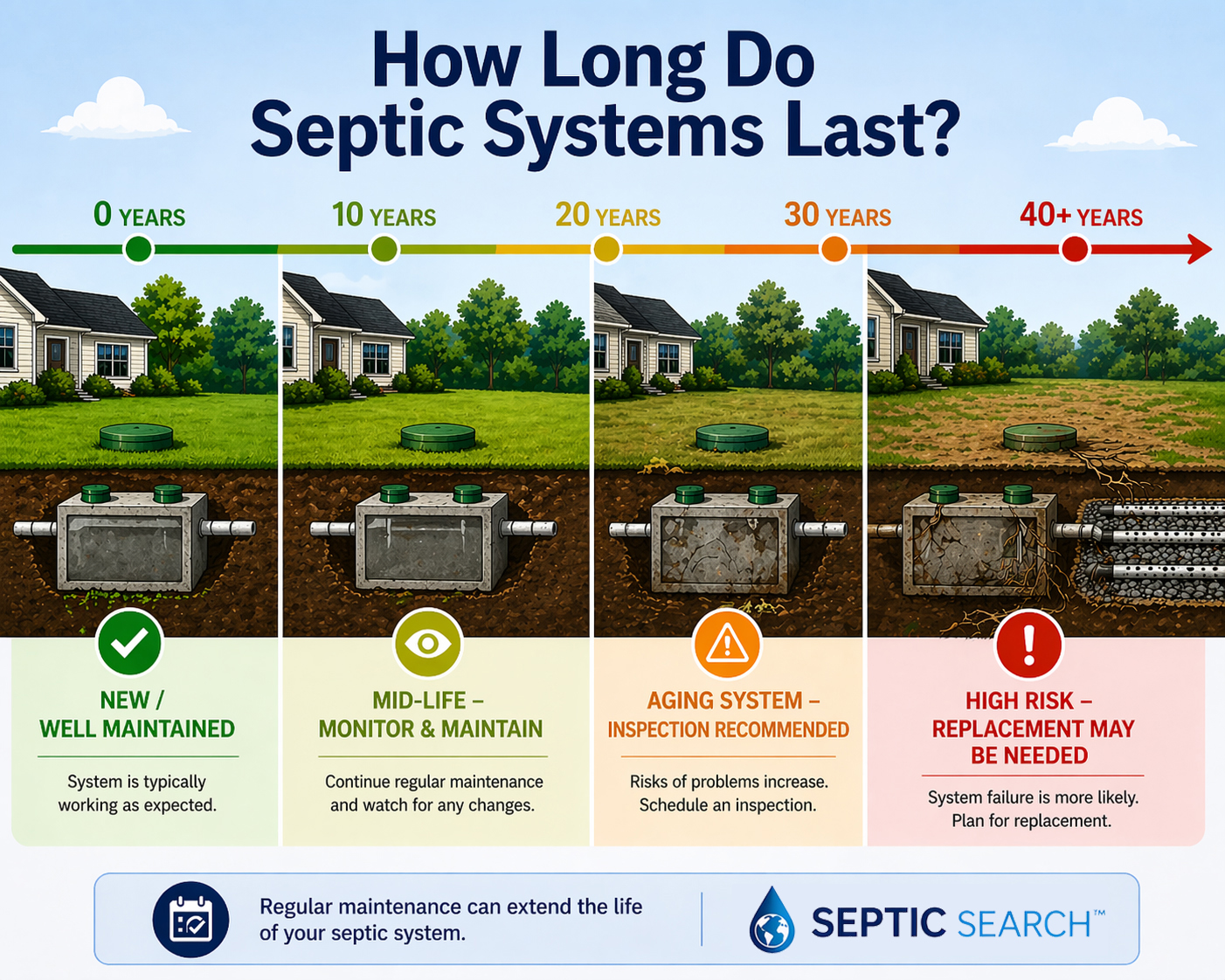
Most septic systems last 20–40 years, depending on maintenance, soil conditions, and usage.
As a system ages, the risk of failure increases—especially after 25–30 years. While older systems may still function, they are more likely to develop issues and should be monitored closely.
If a system is approaching or beyond this age range, a professional inspection is strongly recommended, particularly when buying a home. Understanding the condition early can help you plan for repairs or replacement and avoid unexpected costs.
Using Septic Search & Property Records
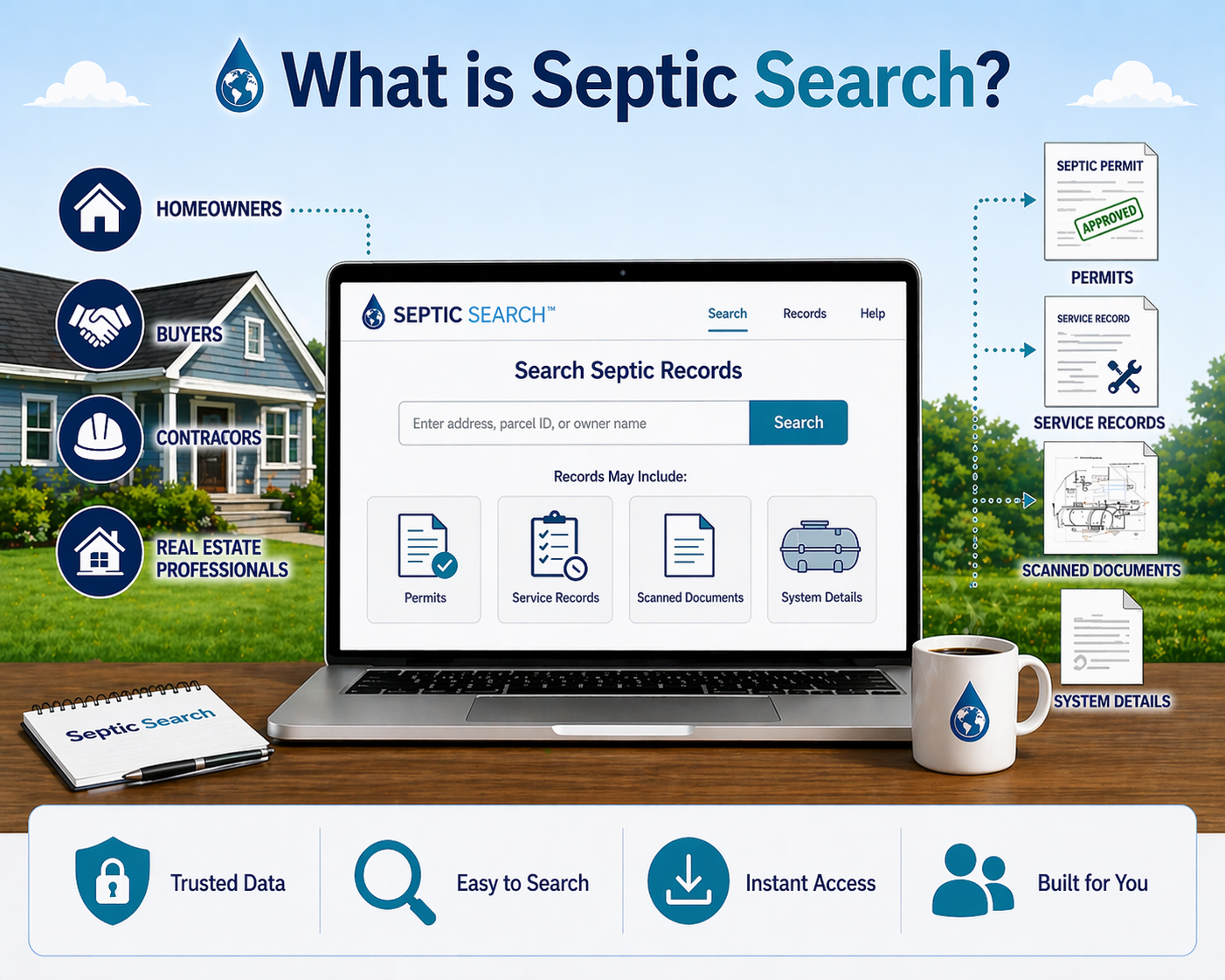
Septic Search is a property-based database designed to make septic system information easy to find and understand.
It allows you to quickly access septic permits, service records, inspection history, and system details for a specific property—all in one place.
By bringing this information together, Septic Search helps homeowners, buyers, contractors, and real estate professionals make faster, more informed decisions. It reduces uncertainty, improves transparency, and helps users take action with confidence.
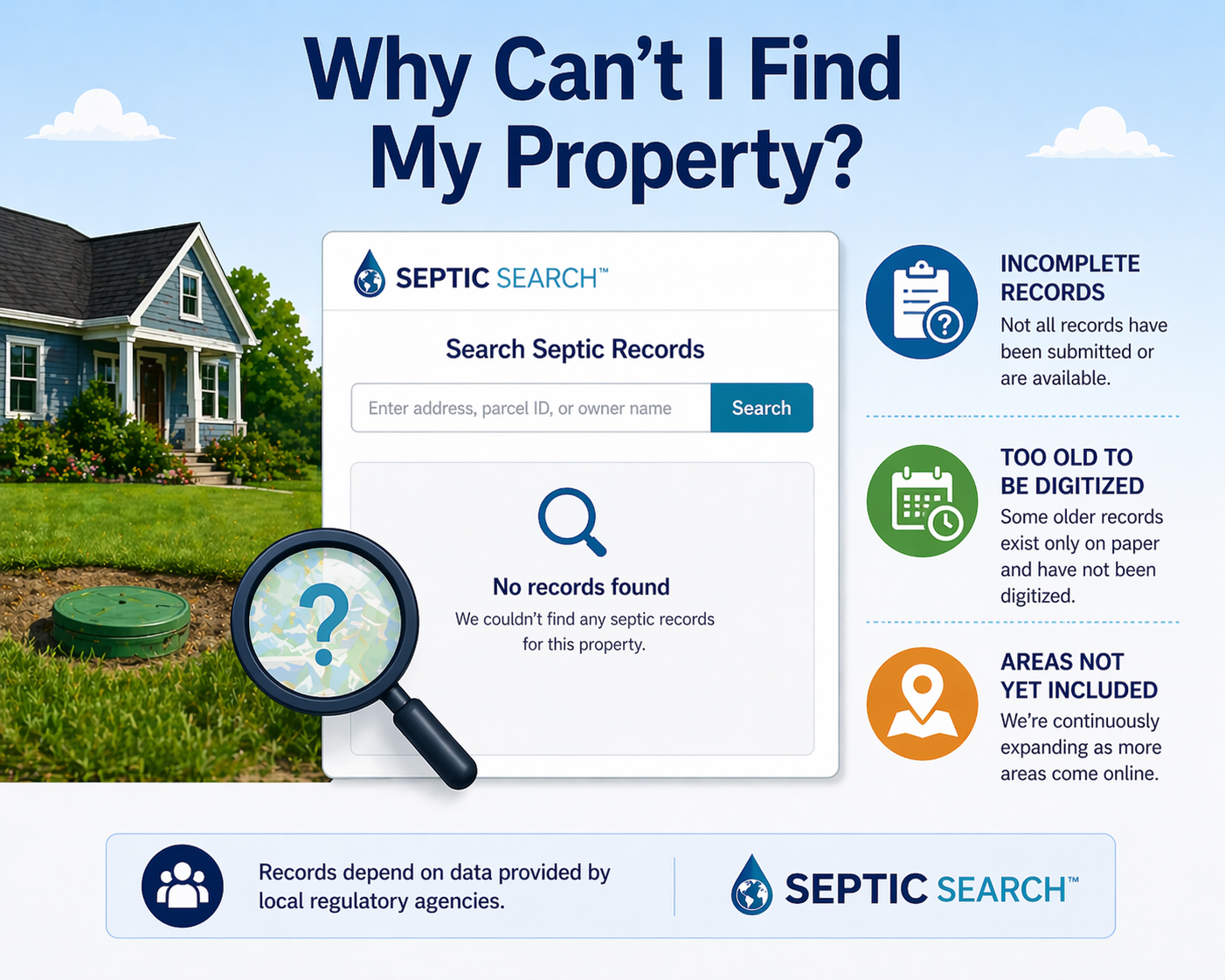
Septic records vary by location and depend on data provided by local agencies. In some cases, information may not be available for a property.
This can happen if:
- Records were never submitted or are incomplete
- The system is older and not digitized
- The area has not yet been added to the database
Septic Search is continually growing as more counties and records are added.
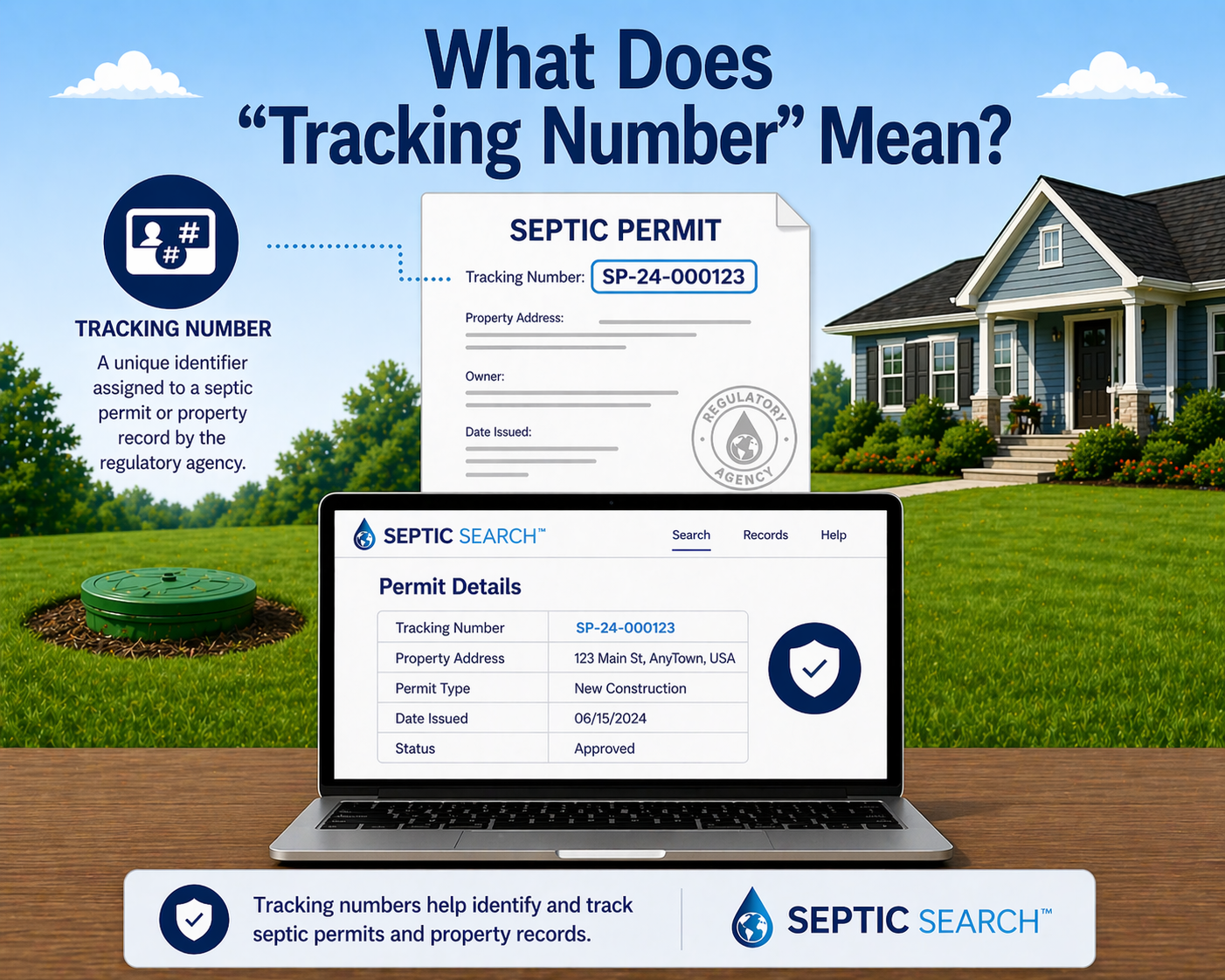
A tracking number is a unique identifier assigned to a septic permit or property record by the local regulatory agency.
It acts as a reference number that allows you to quickly locate, verify, and track a specific septic record within the system.
Using a tracking number ensures you are accessing the correct record, helping avoid confusion and making it easier to review permits, inspection history, and system details with confidence.
Service records provide a history of a septic system and how it has been maintained over time.
They may include past inspections, operating permits, maintenance visits, and regulatory filings that document the system’s condition and performance.
Reviewing service records helps you understand how well the system has been maintained and whether any issues or repairs have been identified, giving you greater confidence when evaluating a property.
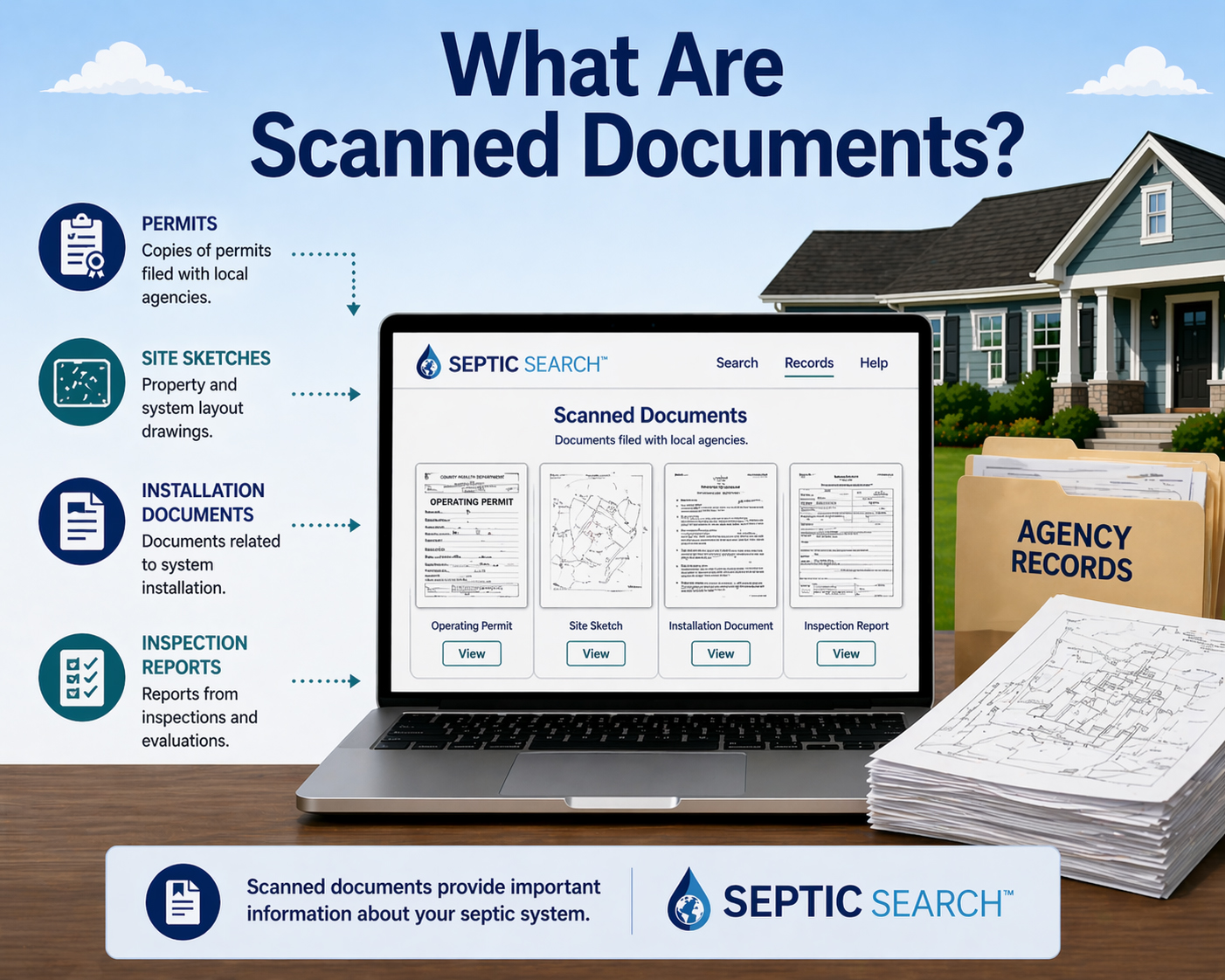
Scanned documents are digital copies of official septic records filed with local agencies.
These may include permits, site sketches, installation documents, and inspection reports that provide a more detailed view of a property’s septic system.
They offer valuable insight into a system’s layout, approvals, and inspection history—information that is often not included in standard record summaries.
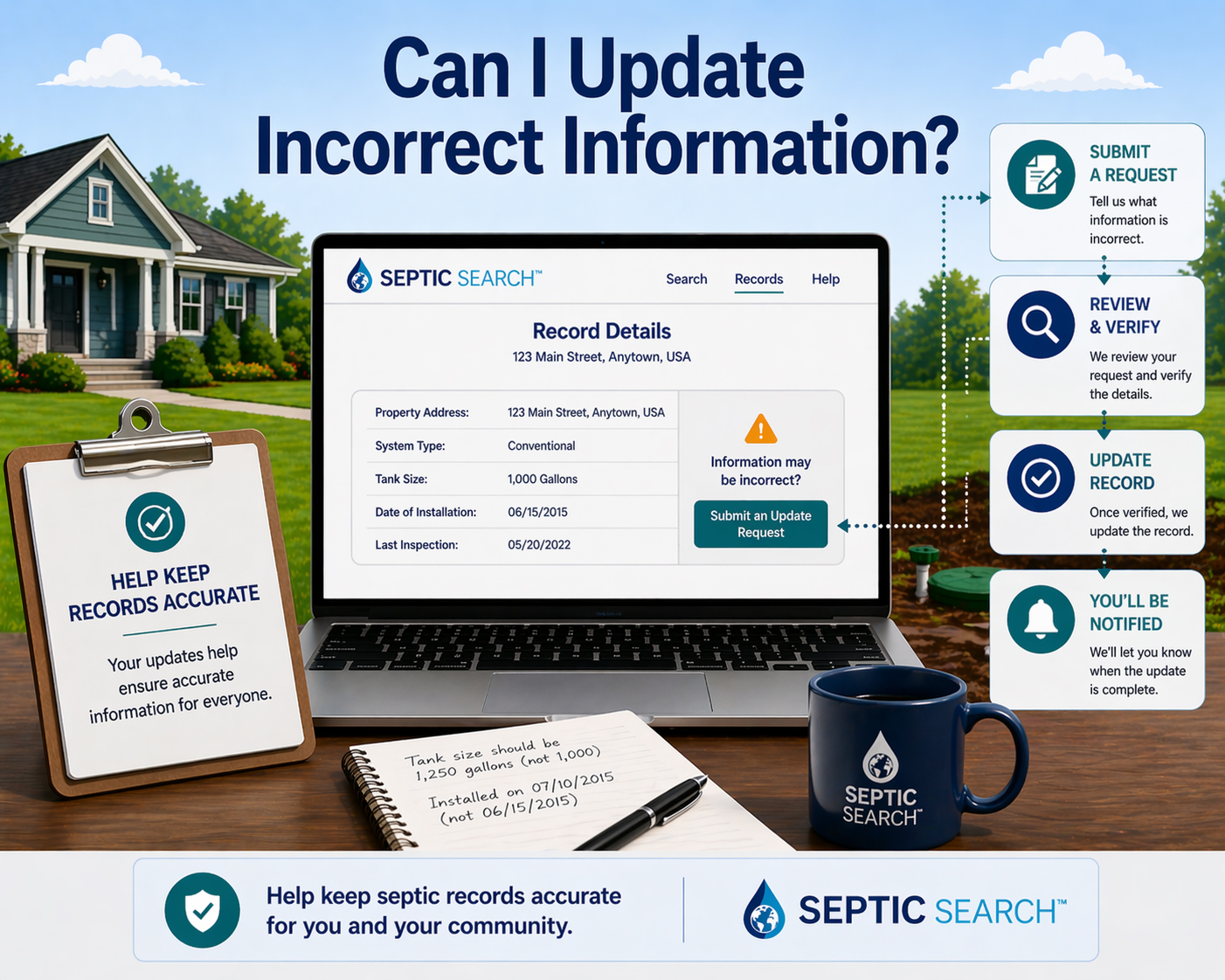
Yes—you can request an update if information appears incorrect.
If you notice missing or inaccurate details, you can submit a request to have the record reviewed and verified.
Our team will evaluate the information, confirm the details with available sources, and update the record if needed to ensure accuracy.
Keeping records up to date helps improve reliability for everyone, including homeowners, buyers, and service providers.
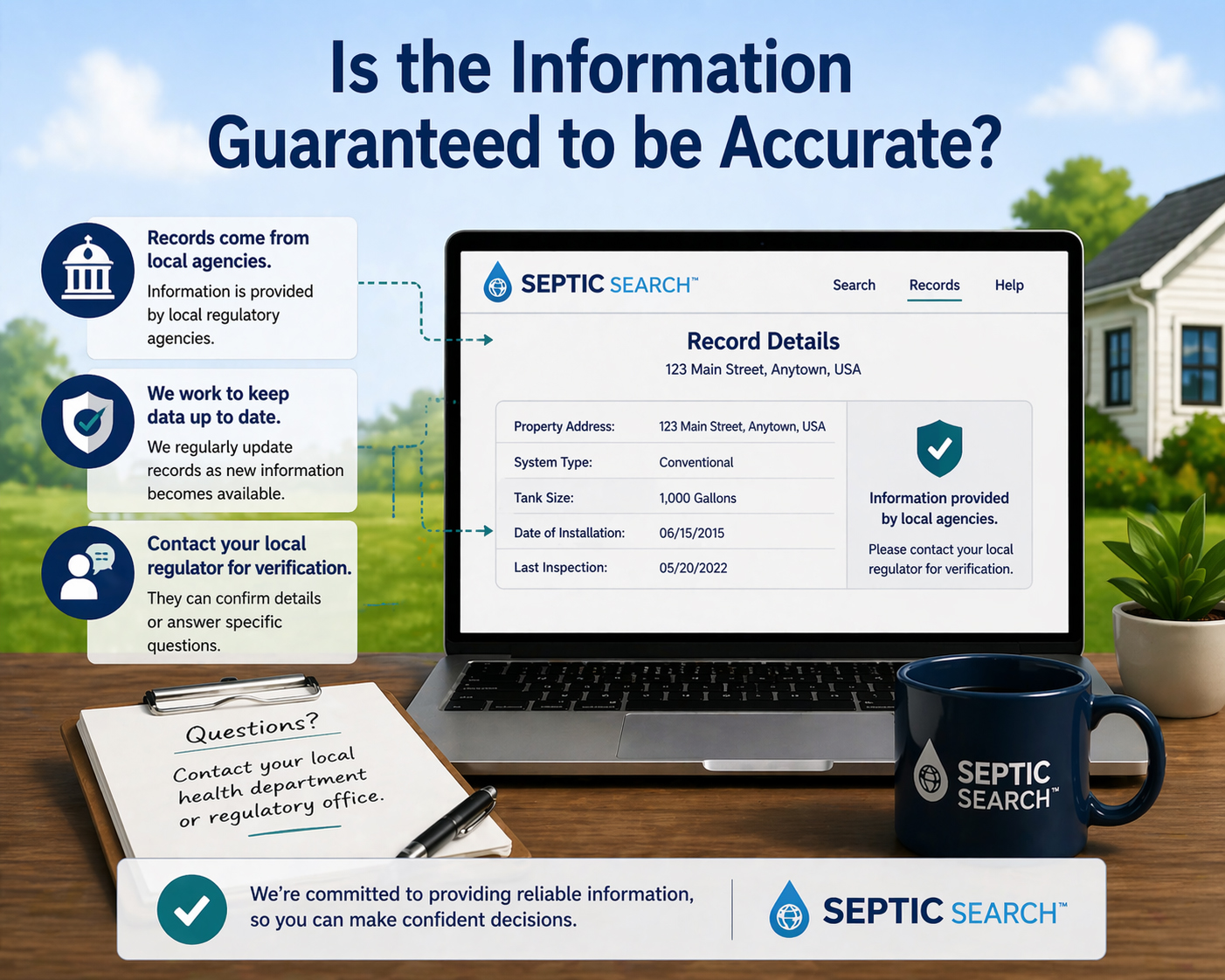
Septic records are based on information provided by local regulatory agencies and may vary in completeness.
While we strive to keep data as accurate and up to date as possible, availability and detail can differ depending on the county and the records provided.
For the most accurate and up-to-date information, we recommend verifying details with your local regulatory agency, especially when making important decisions about a property.
Septic Care & Maintenance
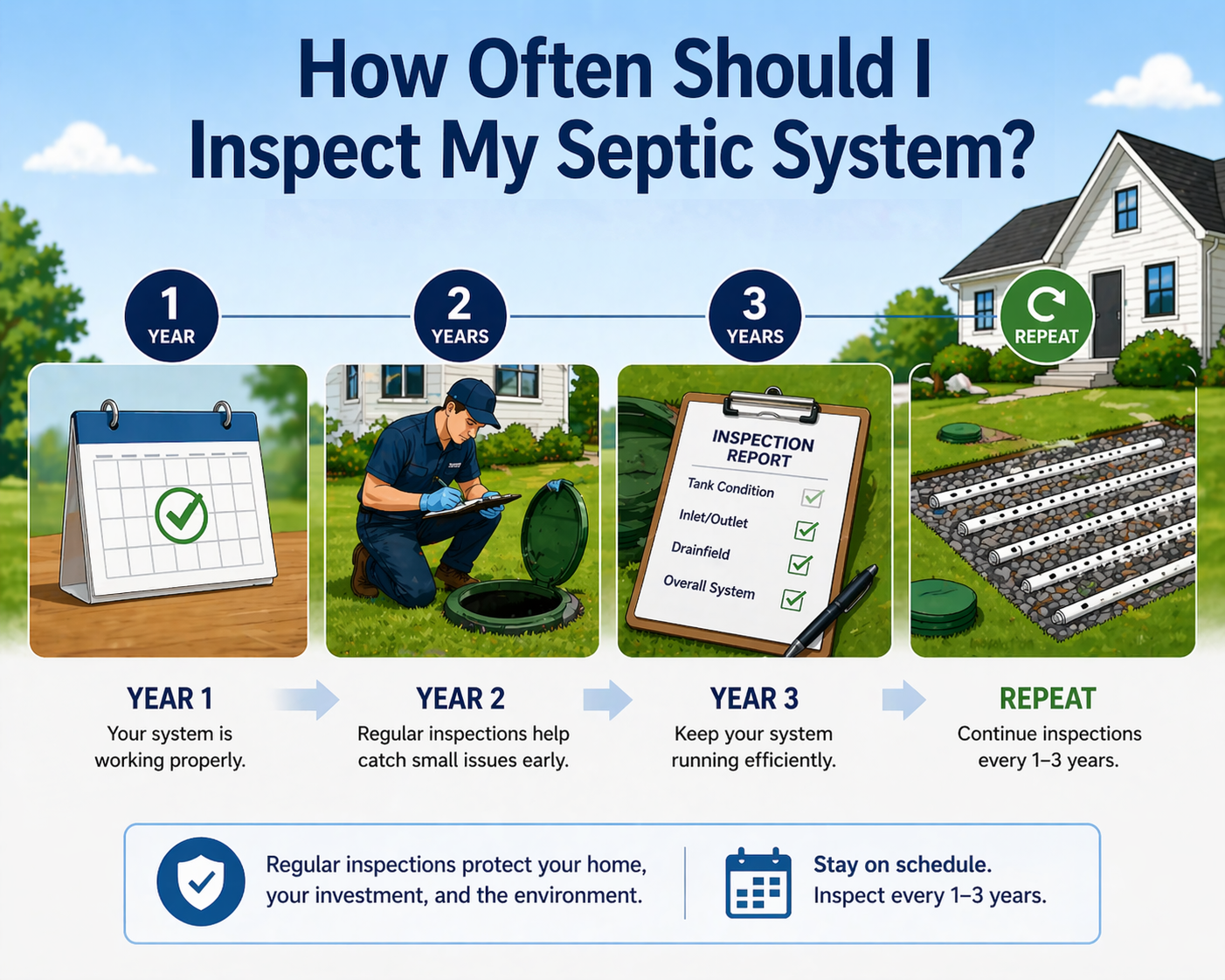
Most septic systems should be inspected every 1–3 years, depending on system size, usage, and household conditions.
Regular inspections help identify small issues before they become major problems, ensure the system is functioning properly, and extend the overall lifespan of your septic system.
Staying on a consistent inspection schedule can reduce the risk of costly repairs, unexpected failures, and disruptions to your home.
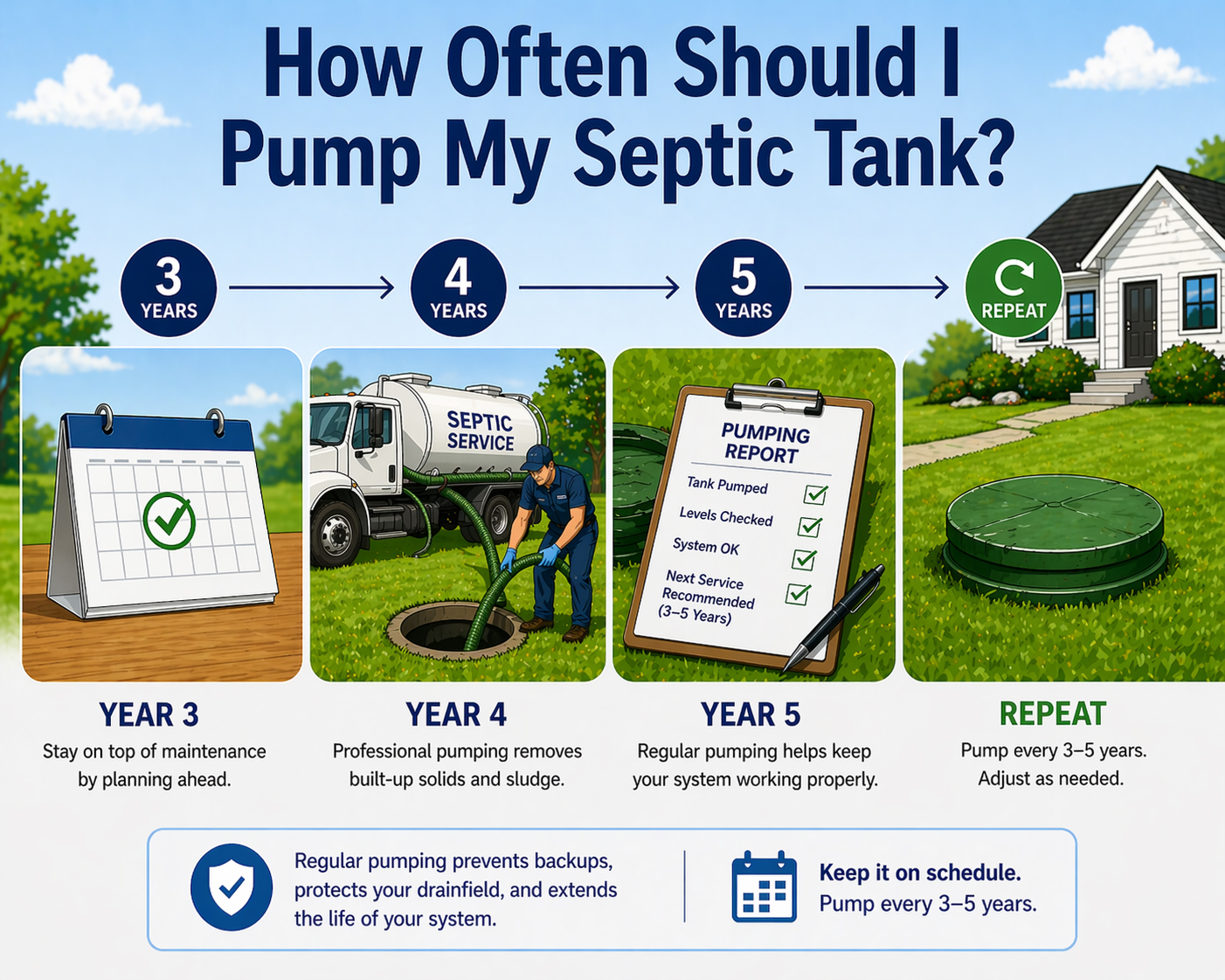
Most septic tanks should be pumped every 3–5 years, depending on system size, household usage, and tank capacity.
Over time, solids build up in the tank, and regular pumping is necessary to prevent backups and maintain proper system function.
Homes with larger households or higher water usage may require more frequent pumping, as waste accumulates more quickly. Staying on a regular pumping schedule helps protect your system, extend its lifespan, and avoid costly repairs.
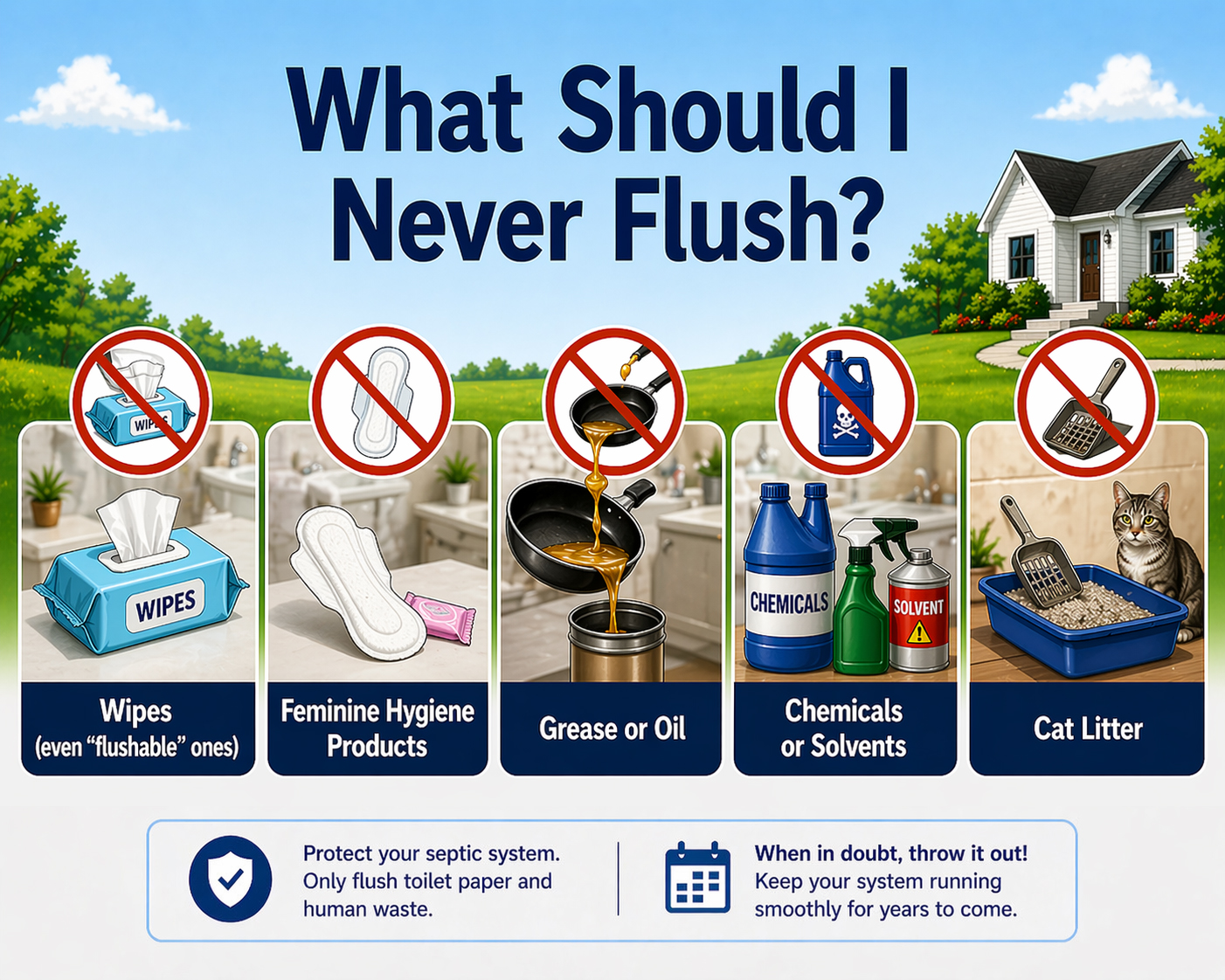
To protect your septic system, avoid flushing anything other than toilet paper and human waste.
Items that should never be flushed include:
- Wipes (even those labeled “flushable”)
- Feminine hygiene products
- Grease or oil
- Chemicals or solvents
- Cat litter
These items do not break down properly and can cause clogs, damage your system, and lead to costly repairs.
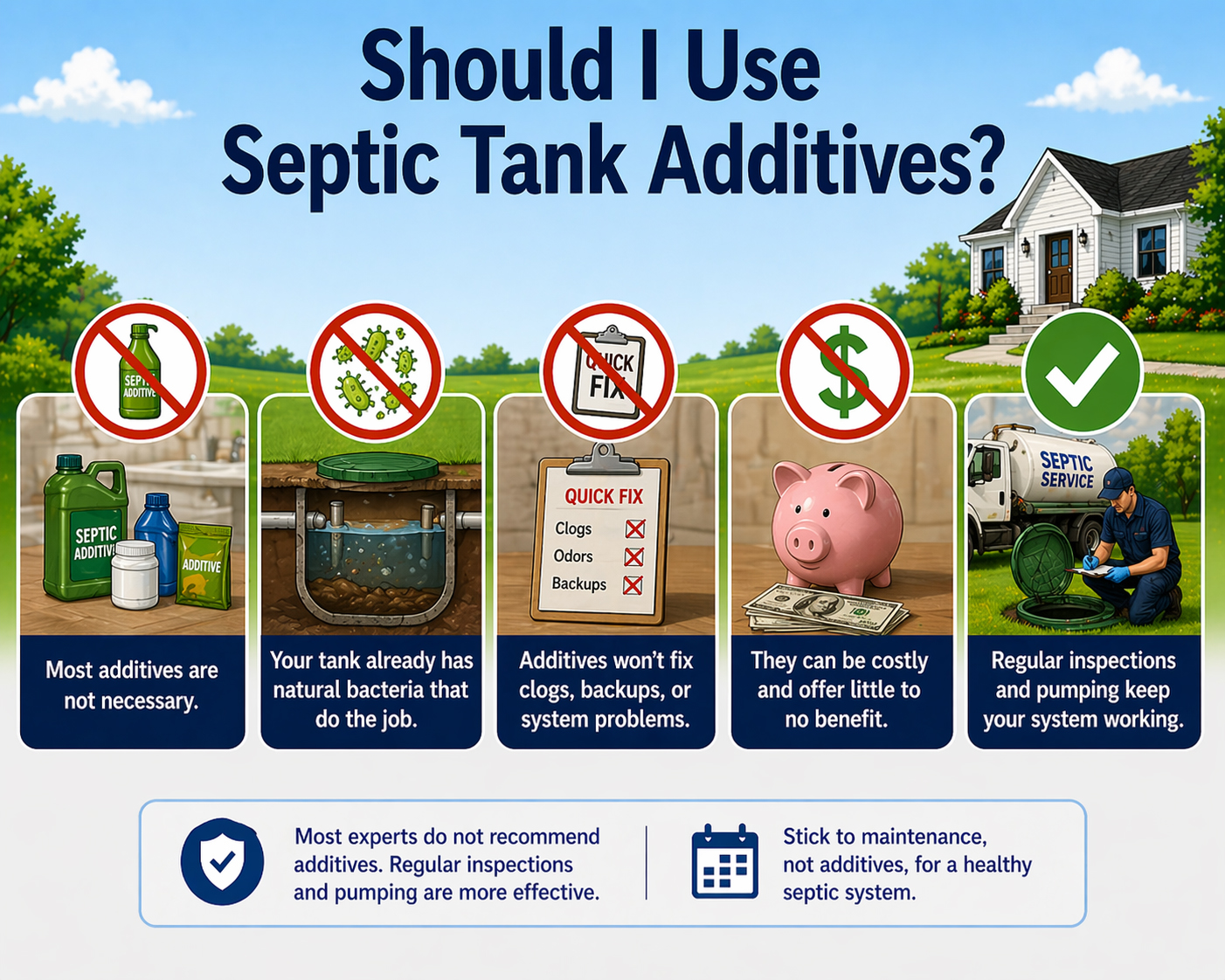
Most experts do not recommend septic tank additives. Your septic system already contains naturally occurring bacteria that break down waste effectively.
In most cases, additives provide little to no benefit and may even disrupt the natural balance inside the tank. Some products can push solids into the drainfield, increasing the risk of clogs or system damage.
Regular inspections and routine pumping are the most reliable ways to maintain your system, prevent backups, and extend its lifespan.
No—driving or building over a septic tank or drainfield can damage critical system components and lead to costly failures.
Septic systems are buried underground, and heavy weight from vehicles, structures, or equipment can compact the soil, crack pipes, or damage the tank.
To protect your system, keep vehicles, structures, and heavy equipment away from all septic components, and avoid placing anything that could interfere with proper operation.

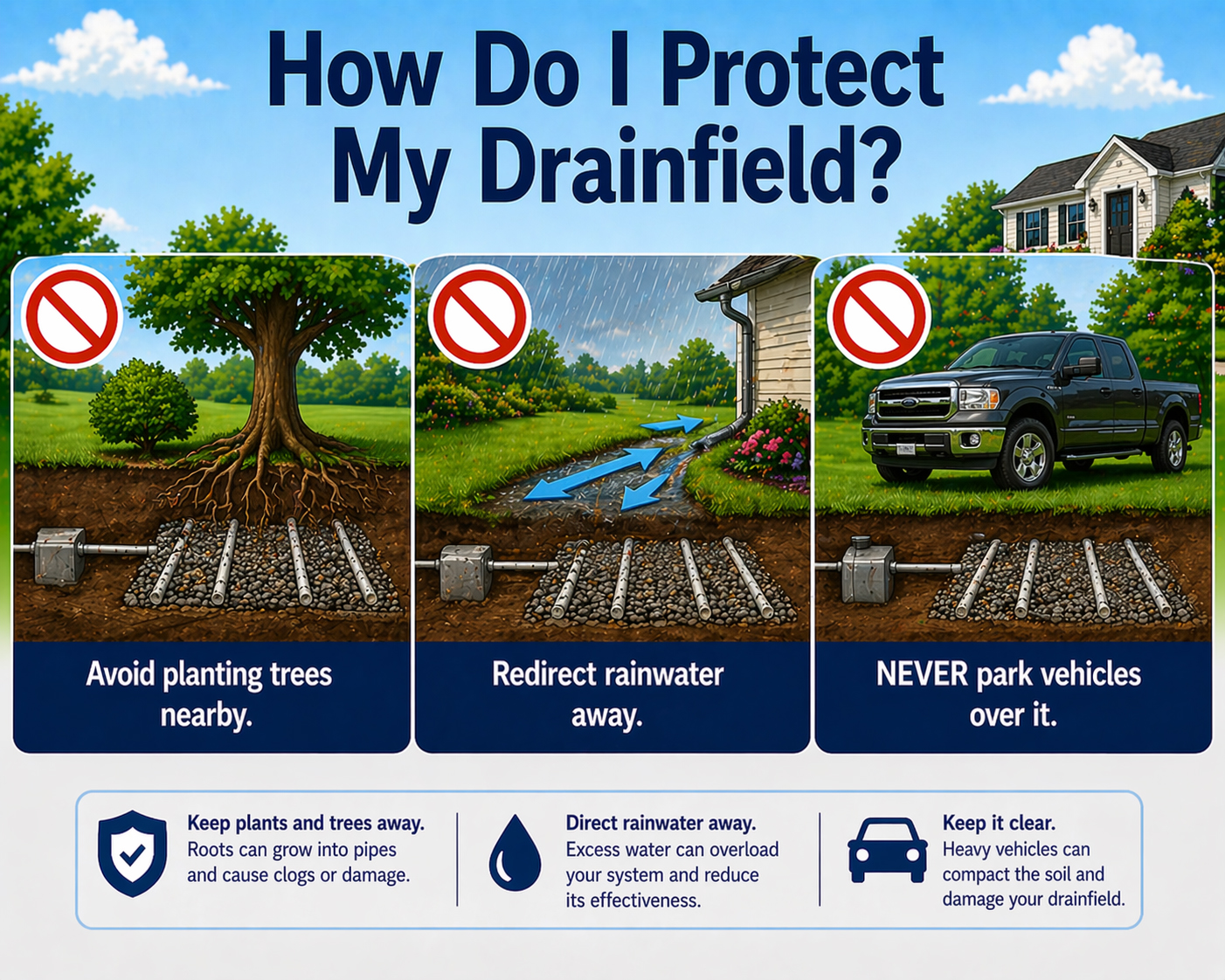
Your drainfield is a critical part of your septic system and should be kept clear and undisturbed.
To protect it, avoid planting trees or large shrubs nearby, redirect rainwater and runoff away from the area, and never drive or park vehicles over it.
These steps help prevent root intrusion, soil compaction, and system overload, keeping your system functioning properly and extending its lifespan.
Inspections & Service Providers
For homebuyers, a septic inspection is critical before purchasing a home.
It provides a clear picture of the system’s condition and can reveal costly issues before closing—giving you the opportunity to negotiate repairs, request credits, or make a more informed decision.
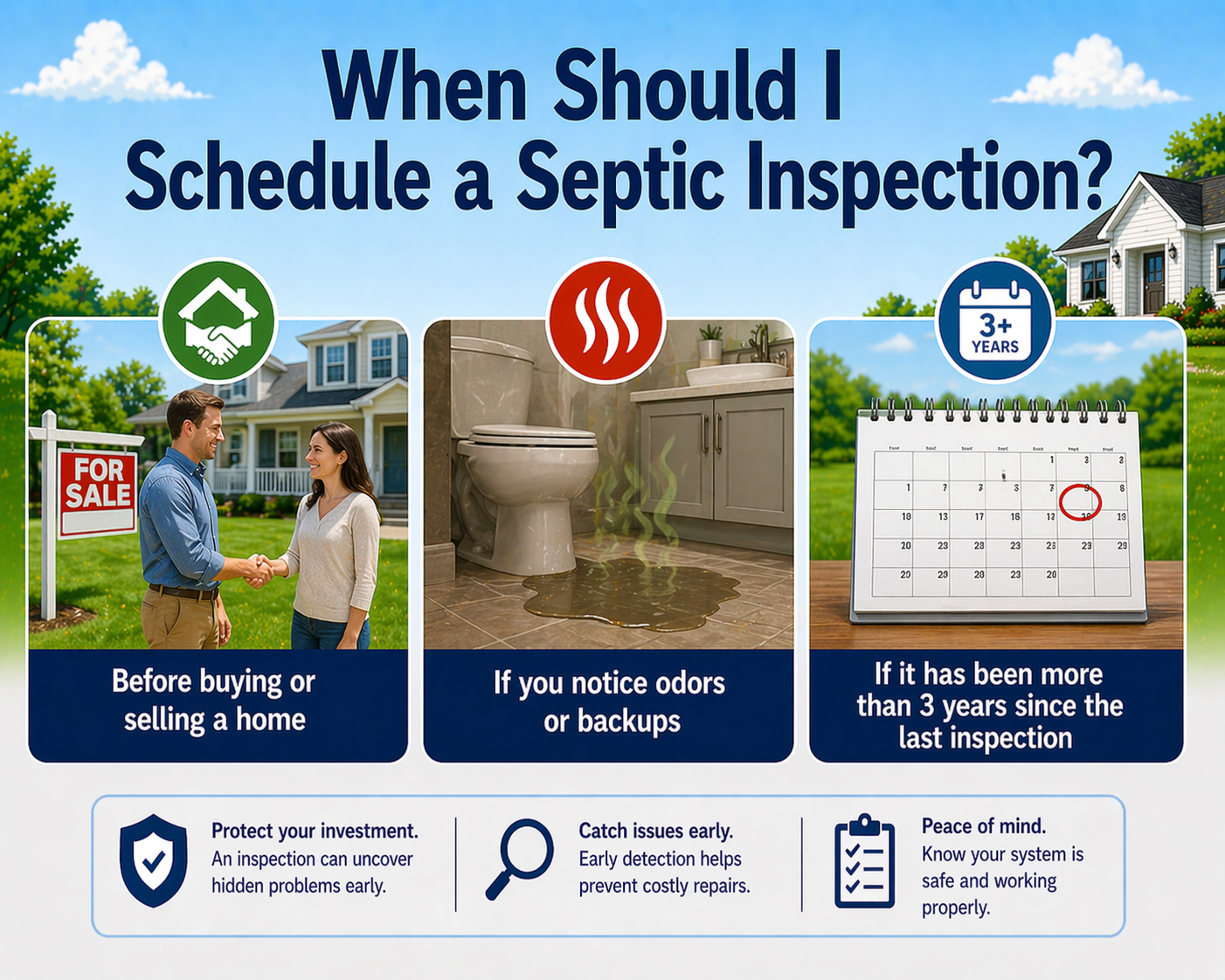
You should also schedule a septic inspection in the following situations:
- Before buying or selling a home
- If you notice odors, slow drains, or backups
- If it has been more than 3 years since your last inspection
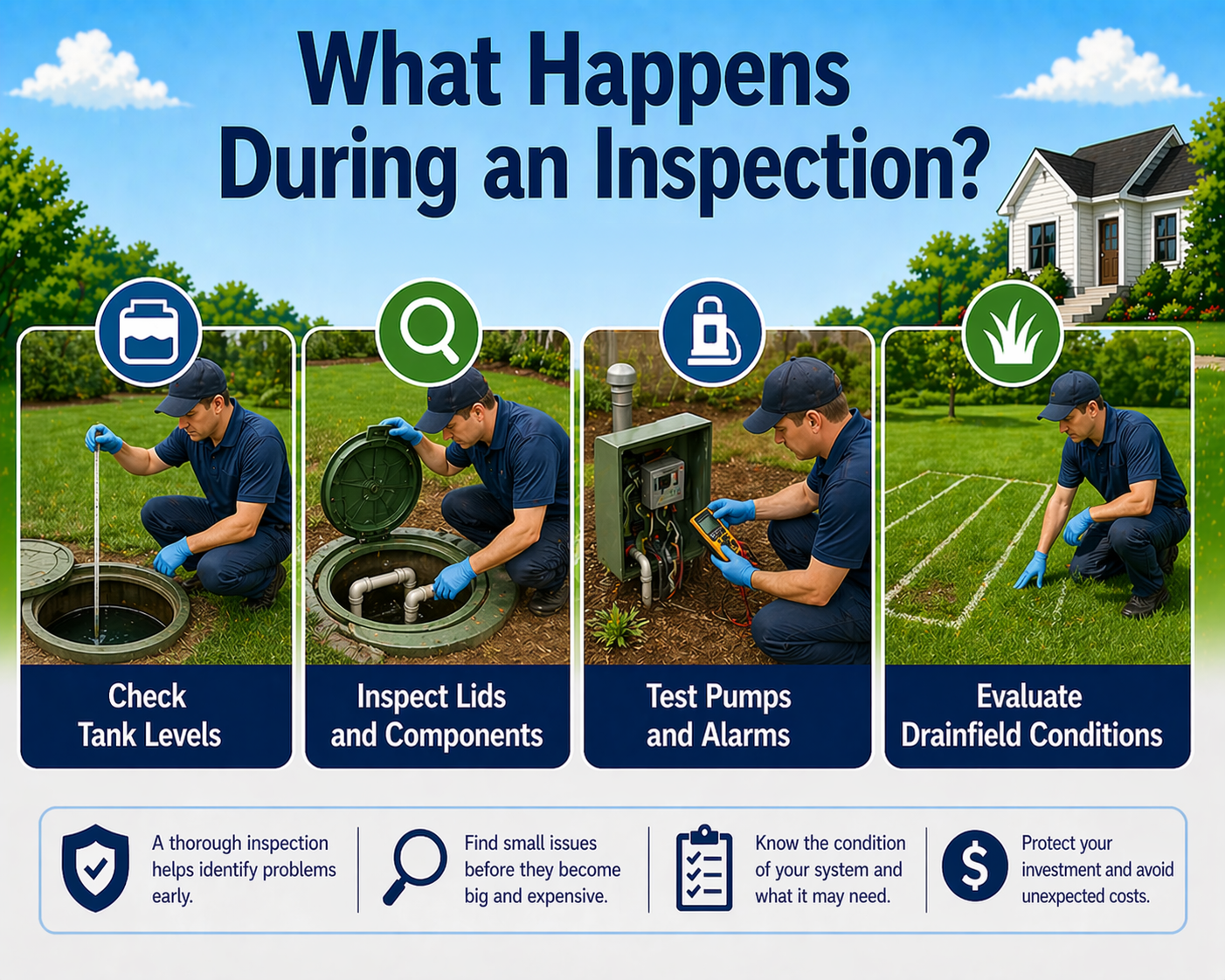
During a septic inspection, a trained professional evaluates the condition and performance of your system to identify any potential issues.
An inspector may do the following:
- Check tank levels to ensure proper operation and capacity
- Inspect lids, access points, and internal components for damage or wear
- Test pumps, floats, and alarms to confirm they are functioning correctly
- Evaluate the drainfield to look for signs of saturation, failure, or poor drainage
A thorough inspection helps detect problems early and provides a clear understanding of the system’s overall condition.
Yes—you can choose your own contractor and stay in full control of the process.
You may contact a licensed septic contractor directly or use the “Request Bid” feature on Septic Search to connect with qualified local professionals.
This flexibility allows you to compare multiple quotes, evaluate experience, and select the best option for your project, helping ensure quality work at a fair price.

Requesting a contractor is quick and easy using the “Request Bid” feature.
On your property detail page, select “Request Bid” to connect with qualified septic contractors in your area.
Once submitted, your request is shared with local service providers, allowing you to receive and compare multiple bids before choosing the best option for your project.
This process helps you find trusted professionals, compare pricing, and make a confident decision based on your needs.

Regulations & Compliance
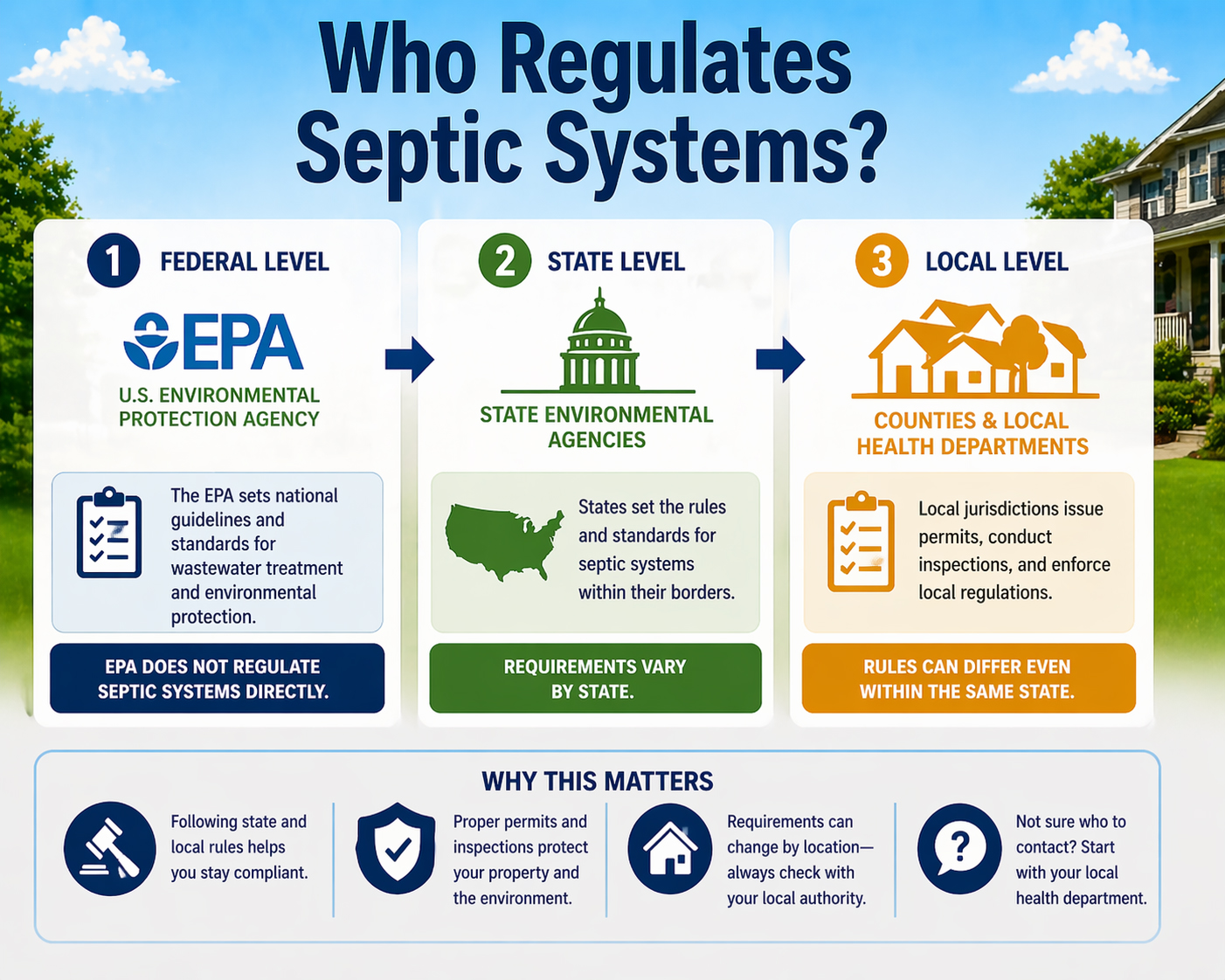
Septic systems are regulated primarily at the state and local level, not directly by the federal EPA.
State agencies establish overall rules and standards, while local health departments or permitting offices typically handle approvals, inspections, and enforcement for individual properties.
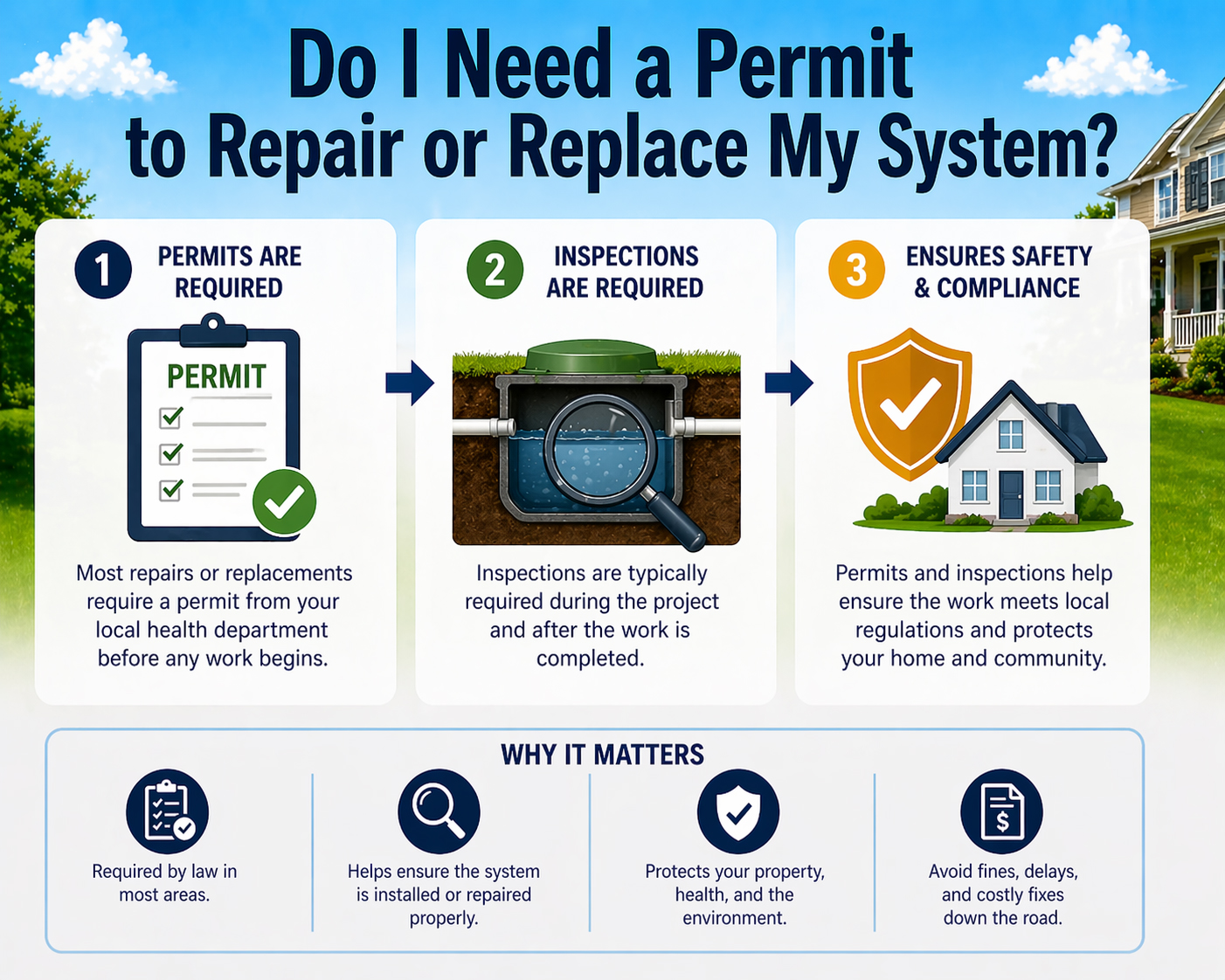
Yes. Most septic system repairs or replacements require permits and inspections from your local regulatory authority.
Permits ensure the work meets local standards, and inspections confirm the system is installed or repaired correctly—helping protect your property and avoid future issues.
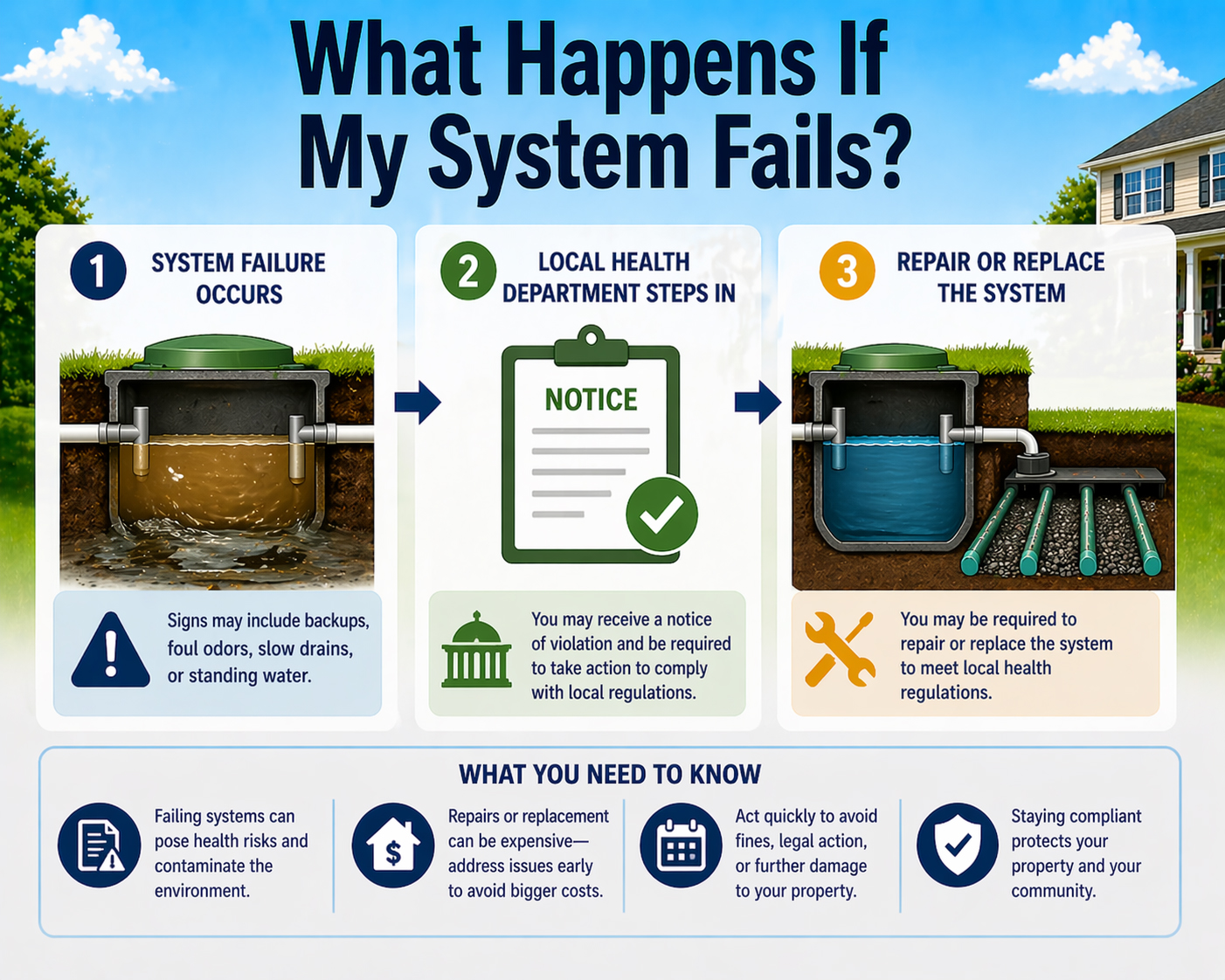
If a septic system fails, it can create health hazards and environmental concerns that must be addressed promptly.
In most cases, you will be required to repair or replace the system to meet local health regulations. Acting quickly can help prevent further damage, avoid fines, and restore proper system function.
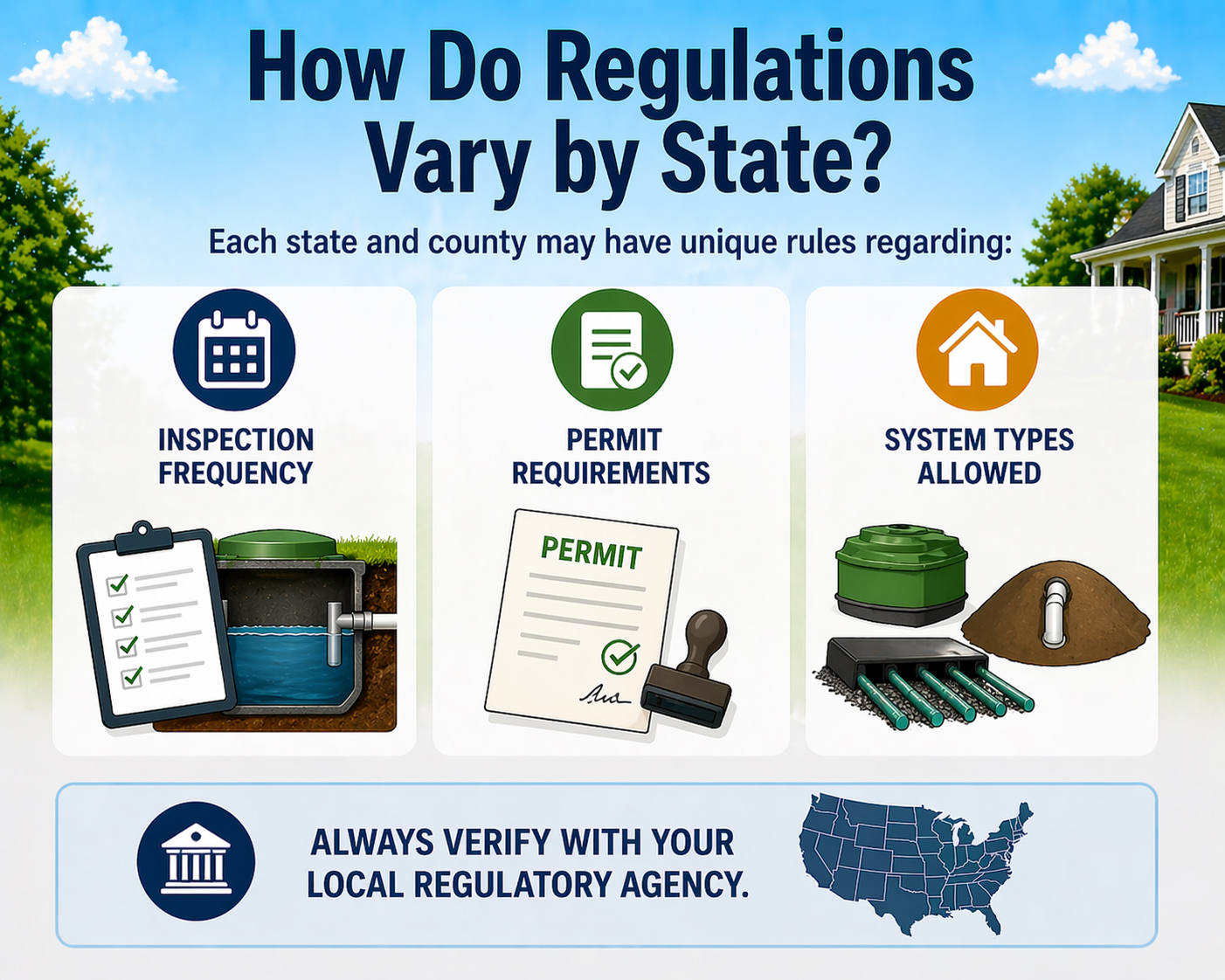
Septic system regulations vary by state and even by county, as local agencies set rules based on soil conditions, environmental concerns, and population density.
Requirements may differ in areas such as inspection frequency, permit approvals, and the types of systems allowed. Because of these variations, it’s important to verify requirements with your local regulatory agency before starting any work.
Costs, Repairs & Financing
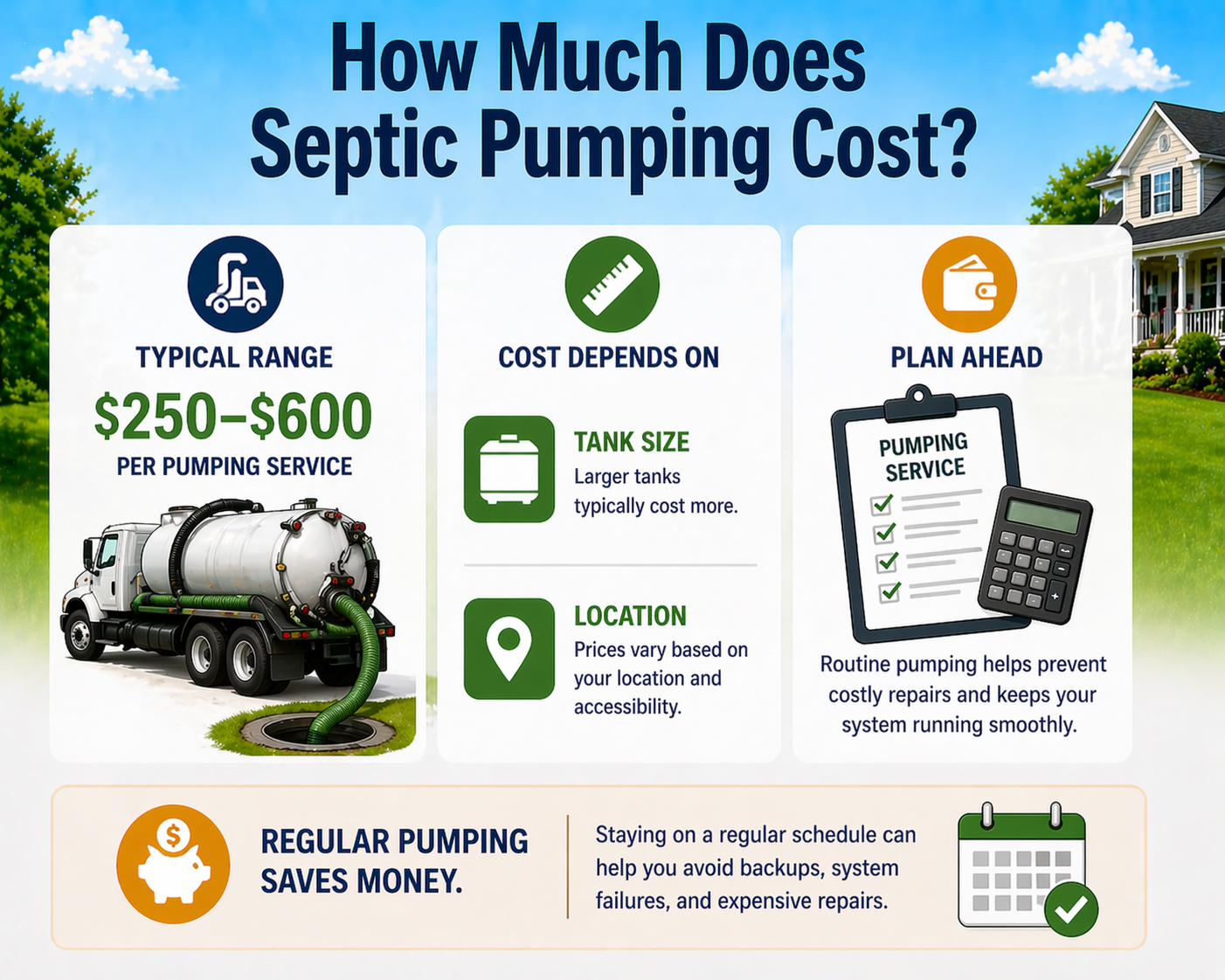
Septic pumping typically costs between $250 and $600, depending on factors such as tank size, location, and accessibility.
Larger tanks or difficult access may increase the cost, while routine maintenance can help keep expenses predictable and prevent more costly repairs.
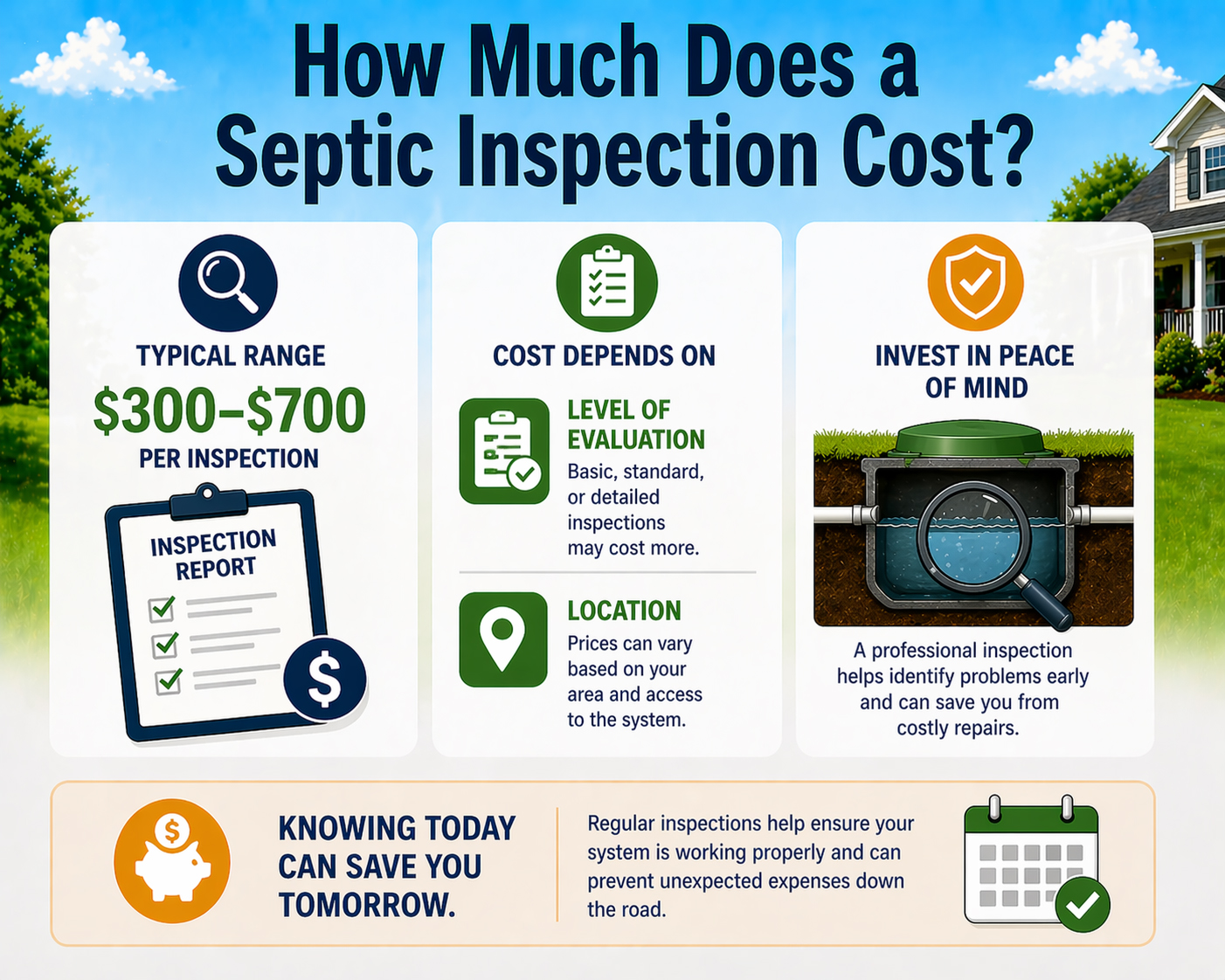
Septic inspections typically range from $300 to $700, depending on the level of evaluation required.
Costs can vary based on factors such as system size, accessibility, and whether a basic or more detailed inspection is performed. While it may seem like an added expense, an inspection can help identify issues early and prevent much larger repair or replacement costs later.
A new septic system typically costs between $5,000 and $20,000+, depending on soil conditions, system type, and local regulations.
More complex systems or challenging site conditions can increase costs, but a properly designed and installed system is a long-term investment that protects your property and prevents future issues.

Yes. Some states and local programs offer financial assistance, including grants or low-interest loans, for qualifying homeowners.
These programs can help reduce the cost of necessary repairs or system replacements. To learn what options may be available in your area, contact your local health department or regulatory agency.

Coverage varies by policy, and most standard homeowners insurance plans do not cover routine wear and tear or maintenance-related septic issues.
However, some policies may cover sudden or accidental damage, such as a system failure caused by an unexpected event.
Because coverage can differ significantly, it’s important to review your policy carefully or contact your insurance provider to understand what is included and what is not.